


What is the importance of choosing the right kitchen sink material?
Selecting the perfect kitchen sink material represents a pivotal decision in kitchen design. The material choice affects not only aesthetics but also durability, maintenance requirements, and long-term satisfaction. This comprehensive guide explores various sink materials, helping you make an informed decision for your home.
Table Of Content
- Introduction
- Understanding Sink Material Properties
- Popular Kitchen Sink Materials
- 1. Stainless Steel
- 2. Granite Composite
- 3. Fireclay
- 4. Copper
- Maintenance Requirements
- Daily Care
- Material-Specific Maintenance
- Cost Considerations
- Budget Ranges
- Installation Considerations
- Weight Requirements
- Professional vs. DIY Installation
- Making Your Decision
- Key Factors to Consider
- Questions to Ask
- Conclusion
Understanding Sink Material Properties
Different kitchen sink materials exhibit unique characteristics that influence their performance and longevity. Key factors include:
- Durability and impact resistance
- Heat tolerance
- Stain resistance
- Noise absorption
- Maintenance requirements
- Cost considerations
- Aesthetic appeal
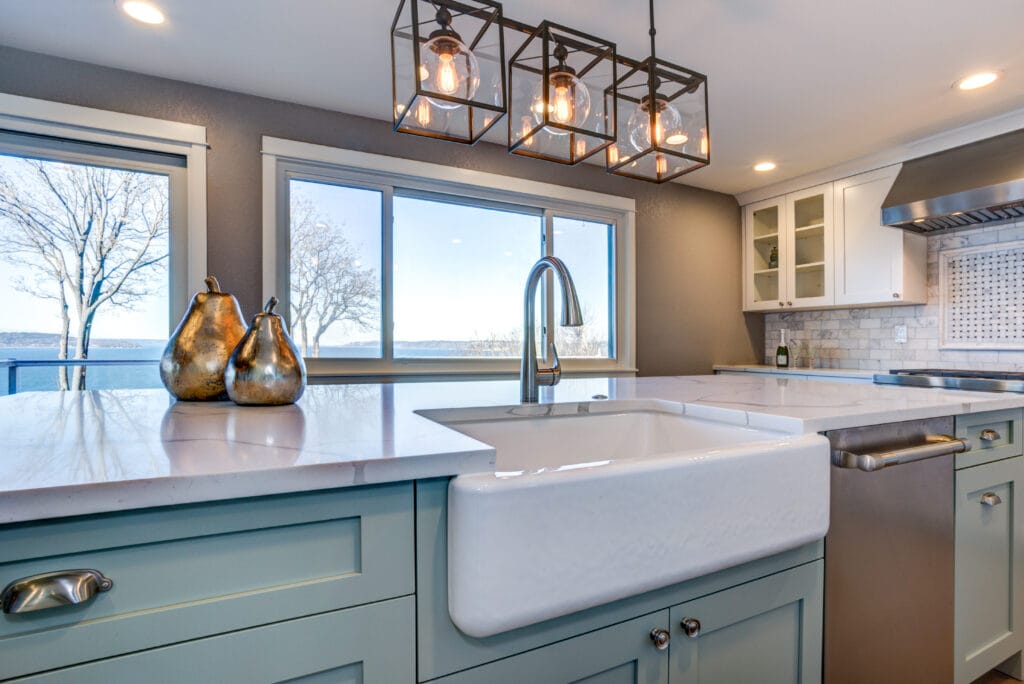
Popular Kitchen Sink Materials
1. Stainless Steel
Stainless steel remains the quintessential choice for modern kitchens, offering an optimal balance of durability and value.
Key Features:
- Available in 16-23 gauge thickness (lower numbers indicate greater thickness)
- Non-porous surface resistant to bacterial growth
- Heat-resistant up to 1500°F
- Variety of finishes (brushed, polished, satin)
Advantages:
- Exceptional durability
- Cost-effective
- Easy maintenance
- Matches modern appliances
- Lightweight construction
Disadvantages:
- Shows water spots
- It can be noisy without proper insulation
- Susceptible to scratching
- Limited color options
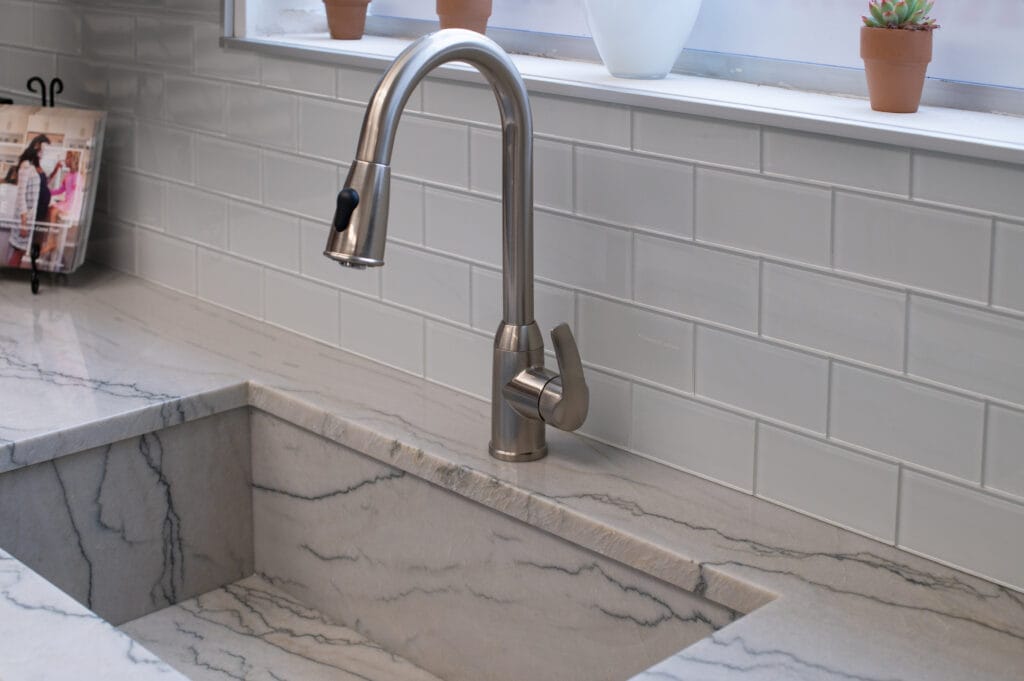
2. Granite Composite
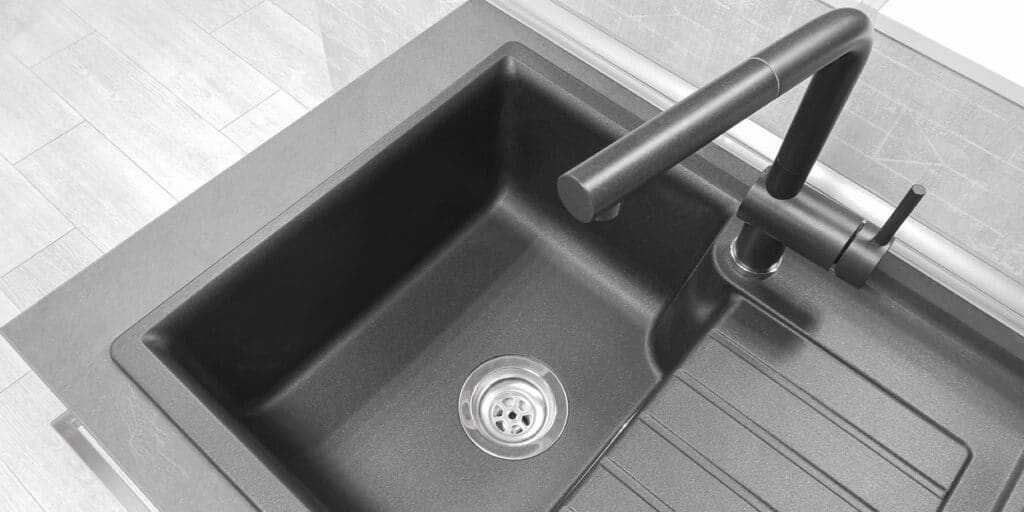
Engineered from a blend of crushed granite (approximately 80%) and acrylic resins (20%), granite composite offers superior durability.
Key Features:
- Heat resistant up to 535°F
- Non-porous surface
- Uniform color throughout
- Natural stone appearance
Advantages:
- Extremely durable
- Scratch and chip-resistant
- Color-fast properties
- Quieter than stainless steel
- Resistant to stains and acids
Disadvantages:
- Premium price point
- Specific cleaning requirements
- Heavier than stainless steel
- Limited color palette
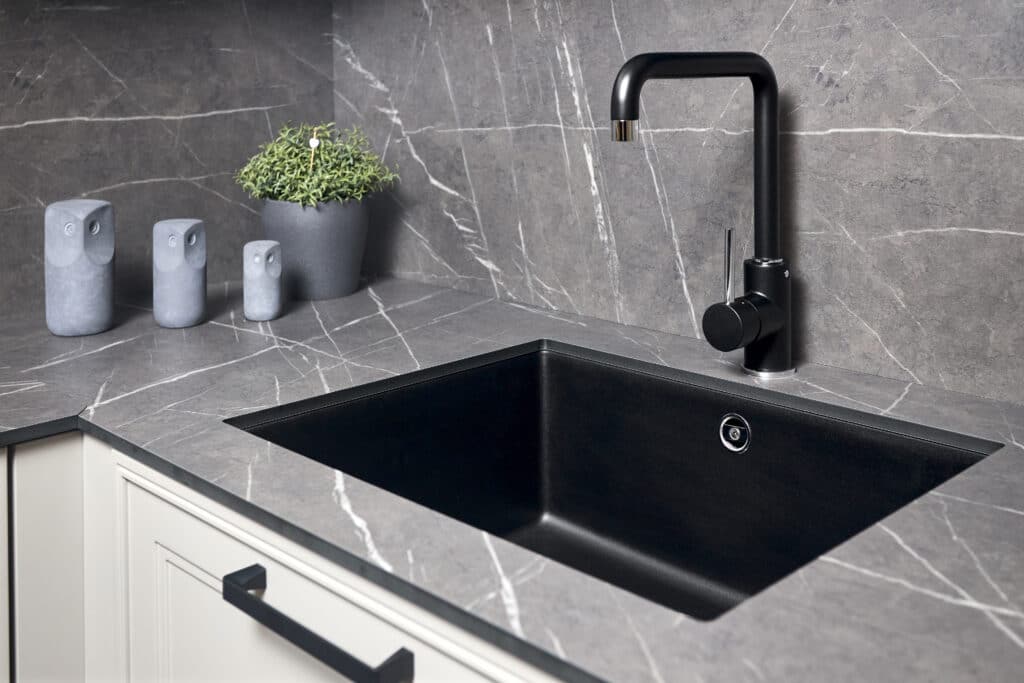
3. Fireclay
This traditional material undergoes an intensive firing process at extremely high temperatures, creating a remarkably durable surface.
Key Features:
- Fired at temperatures exceeding 2000°F
- Non-porous glazed surface
- Traditional farmhouse aesthetic
- Extremely durable finish
Advantages:
- Exceptional durability
- Resistant to scratches and chips
- Classic appearance
- Easy to clean
Disadvantages:
- High cost
- Heavyweight requires additional support
- Limited style options
- Professional installation recommended
4. Copper
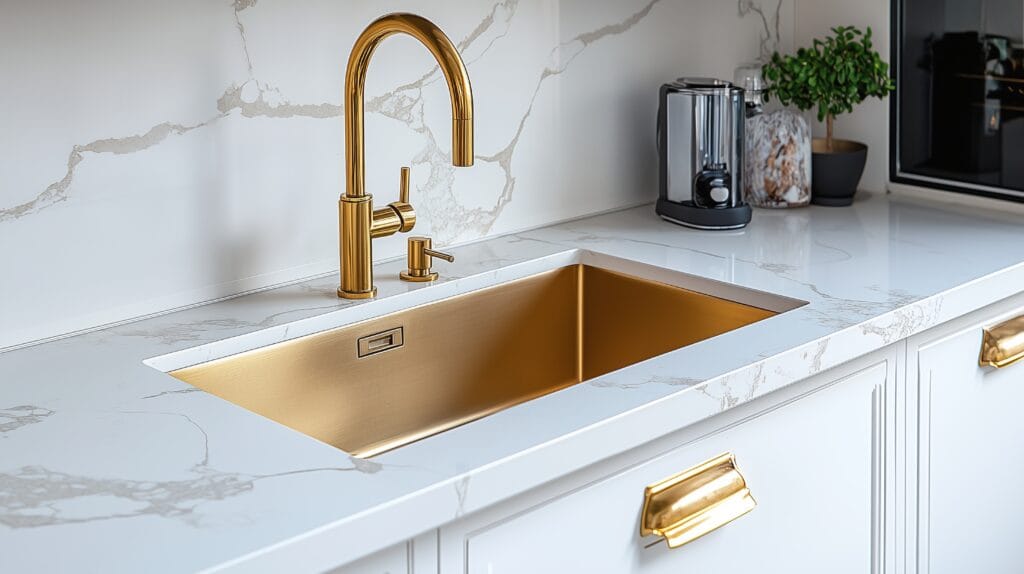
Copper sinks offer unique character and natural antimicrobial properties.
Key Features:
- The living finish develops a patina
- Natural antimicrobial surface
- Available in various gauges
- Handcrafted options available
Advantages:
- Distinctive appearance
- Naturally antimicrobial
- Each piece unique
- Ages beautifully
Disadvantages:
- Requires regular maintenance
- Premium pricing
- Sensitive to acidic substances
- Patina development varies
Maintenance Requirements
What is the daily care routine for kitchen sinks?
- Wipe clean after each use
- Use appropriate cleaning products
- Dry surface to prevent water spots
- Address spills promptly
Material-Specific Maintenance
Stainless Steel:
- Regular polishing
- Avoid bleach and abrasive cleaners
- Use soft cloths for cleaning
- Consider protective grids
Granite Composite:
- Use manufacturer-approved cleaners
- Avoid harsh chemicals
- Regular sealing may be required
- Prevent prolonged standing water
Fireclay:
- Gentle cleaning agents
- Avoid impact from heavy objects
- Regular inspection for chips
- Non-abrasive scrubbers only
Copper:
- Regular waxing or sealing
- Avoid acidic cleaners
- Accept patina development
- Use specific copper cleaners
Cost Considerations
Budget Ranges
Entry-Level ($200-$500):
- Basic stainless steel
- Simple designs
- Limited features
- Standard finishes
Mid-Range ($500-$1000):
- Higher gauge stainless steel
- Granite composite options
- Better sound insulation
- More size options
Premium ($1000+):
- Copper and fireclay options
- Custom designs
- Specialty features
- Professional-grade materials

Installation Considerations
What are the weight requirements for kitchen sink installation?
- Check the cabinet support capability
- Consider countertop material strength
- Plan for additional bracing if needed
- Factor in water weight
Professional vs. DIY Installation
- Assess the skill level required
- Consider warranty requirements
- Factor installation costs
- Evaluate complexity
Making Your Decision
What are the key factors to consider when choosing a kitchen sink?
- Daily usage patterns
- Maintenance willingness
- Budget constraints
- Kitchen design
- Installation requirements
What questions should you ask before choosing a kitchen sink?
- How often do you cook?
- What’s your cleaning routine?
- What’s your long-term budget?
- How important is appearance?
- Do you need professional features?
What is the conclusion on choosing kitchen sink materials?
Choosing the right kitchen sink materials requires careful consideration of multiple factors. Balance durability, maintenance requirements, and budget with your specific needs and preferences. Consider long-term value over initial cost, and select a material that complements your cooking habits and kitchen design.
Remember that the quality of kitchen sink materials often provides better long-term value despite higher initial costs. Invest time in understanding maintenance requirements and consider professional installation for optimal results.