

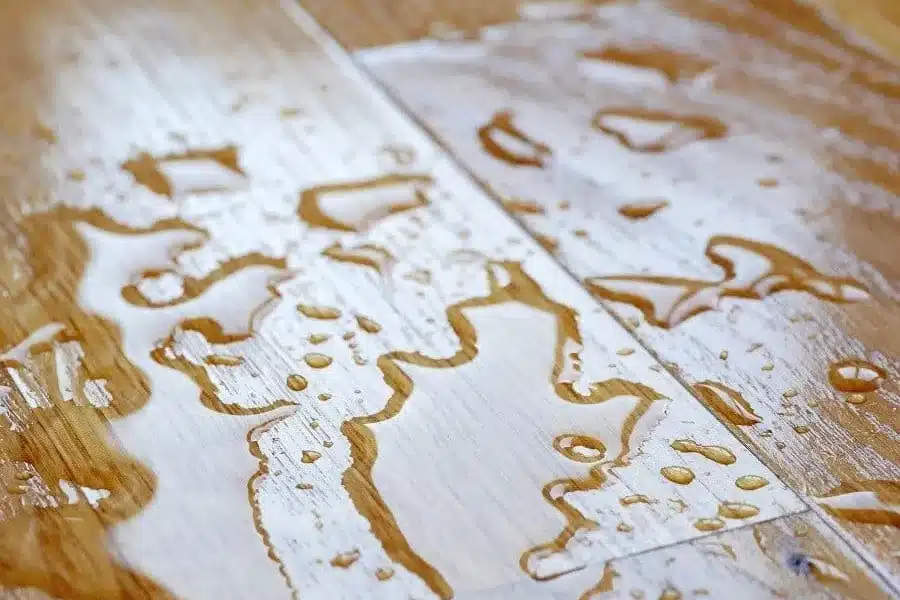
A Complete Guide to Fix Water-Damaged Hardwood Floors
Hardwood floors have always been my favorite type of flooring, no matter what aesthetic I am going for. Nothing can bring a more luxurious feel to your space than these beauties do.
Table Of Content
- A Complete Guide to Fix Water-Damaged Hardwood Floors
- But even the prettiest hardwood floors have their weak points.
- How to Tell if Your Floor is Damaged with Water?
- Hardwood Floor In Entry
- Staining on the Hardwood Floor
- Fixing the Water Damaged Floor by Replacing Damaged Flooring
- Step #1. Identify the Source of the Water
- Step #2. Identify Which Planks Need to be Replaced
- Step #3. Remove the Water-Damaged Flooring
- Step #4. Ensure that the Concrete Floor is Dry
- Step #5. Install the New Hardwood Planks
- Step #6. Sand and Refinish the Entire Floor
- Tips to Prevent Damages to Your Hardwood Flooring
- Keep the Sealant Up and Running
- Keep a Check on Potential Water Sources
- Clean with Care
- Wrapping it Up
Hardwood floorings are incredibly popular among interior designers and homeowners. From offices to the home interior to the dance studio floor, hardwood floors are an ideal pick for every space.
What are the weak points of hardwood floors, especially regarding water damage?
Hardwood floors' main weak point is their tendency to absorb water, leading to severe damage. When exposed to water, hardwood flooring undergoes multiple unpleasant changes, such as planks losing their natural look or becoming entirely damaged. This issue is frustrating, but solutions exist. This guide will teach you how to fix water-damaged hardwood floors and restore their appearance.
When your hardwood flooring is exposed to water, it will lead to multiple unpleasant changes in the wood.
The wood planks may lose their natural look or get damaged entirely.
Super frustrating, right?
But don’t worry. There’s always a solution to the problem.
Today, you’ll learn how to fix water-damaged hardwood floors and make them look as good as new ones.
How to Tell if Your Floor is Damaged with Water?
Did you notice any changes in your hardwood floor?
It is a sign that your floor has been exposed to water damage.
The water-damaging effect on a hardwood floor is not instant. It builds over time.
Here are a few signs to tell if your floor is water-damaged.
What are the signs of water damage on hardwood floors, such as cupping or crowning?
If your wood floor is damaged with water, you may observe the cupping of single planks or the crowning of multiple planks, making them look hump.
When the hardwood floors wood absorbs water, it expands. This expansion can make the whole plank or various planks buckling.
Staining on the Hardwood Floor
There may appear black or dark staining on a water-damaged floor.
Water accumulation beneath wood planks results in mold growth. This mold combines with the tannins in a wood-turning color, resulting in staining.
Tannins react when they come in contact with the water minerals. It leads to wood staining, or you may observe rust along the edges of a plank.
Fixing the Water Damaged Floor by Replacing Damaged Flooring
You may sand, refinish, and re-coat the wood floor to repair water damage, but is not a permanent solution.
The best way to avoid and fix water damage to wood floors is to get them repaired.
To do this, you will have to take out the affected planks and replace them with new boards.
The process will take time, and you may need the services of a professional craftsman to do the job.
However, you may DIY replace the water-damaged hardwood floor by following these six simple steps.
Step #1. Identify the Source of the Water
It is crucial to find the original source of water before replacing the damaged flooring.
Once you identify the source, take some steps to resolve the source of water that is damaging your hardwood floor.
If you replace the flooring without resolving the problem, it will repeat and damage your floor after a few weeks or months.
Step #2. Identify Which Planks Need to be Replaced
This is certain that you’ll have to replace the planks that are visually appearing damaged with water.
But, there might be invisible mold, mildew, or water accumulation on the non-affected planks that may appear in the future.
Therefore, you’ll also have to take additional planks out, surrounding the damaged planks. It will create a buffer to ensure that hidden damage to the surface won’t occur again.
You may, alternatively, select the planks in an even pattern to ensure the seamless repair look.

Step #3. Remove the Water-Damaged Flooring
Once you have selected the planks to be replaced, remove them carefully.
When you remove the top layer of wood, make sure to inspect the plywood base. If you find that the plywood subfloor is weakened by water or has mold growth, then make sure to pull off the top layers.
Step #4. Ensure that the Concrete Floor is Dry
Is there concrete underneath your plywood base?
If yes, then you must ensure that it is dry. Allow moisture to expel that may have been trapped by the concrete subfloor.
Remember that if you patch new plywood into the existing concrete without letting it dry, it will cause problems later. The moisture or mold will travel through the base of wood planks, damaging its surface.
Step #5. Install the New Hardwood Planks
Once you’re sure that the concrete subfloor is dry, it’s time to install new flooring.
Note. Consider installing a moisture barrier, if necessary, and an appropriate sound barrier, such as cork, if you live in a high-rise building. It will help avoid future problems.
Now you can start the process of selecting, cutting, sizing, and installing the new wood planks.
For this step, I’d recommend taking the help of an experienced floor installation company. Otherwise, you need to give the closest attention to details to avoid gaps between the planks.
Doing it wrong can create potential structural problems. There may also appear gaps between old and new wood, creating canyons like appearance.
Step #6. Sand and Refinish the Entire Floor
Once you have appropriately installed the new planks, it is time to sand and refinishes the entire flooring for a more uniform look.
Sanding and refinishing will also make old planks look new and sleek as the wood loses its natural color over time due to sunlight and other factors.
However, if your budget doesn’t allow you to refinish the entire floor, then do a spot refinish.
Refinish the newly installed planks to match the color of old boards. Or tweak the stain color on the wood.
However, the task can be challenging. You may find it hard to match the color of new and old planks unless you refinish the whole of it.
That’s all, and you’re done.
Tips to Prevent Damages to Your Hardwood Flooring
To keep your new or existing hardwood floor from any damages, it is crucial to maintain it properly.
Here are a few tips to limit the floor damages.
Keep the Sealant Up and Running
The sealant is like wax to keep your wooden floors undamaged. Sealants offer a layer of protection to the wood floors, preventing it from excessive water damage.
However, remember that having a sealant will not entirely keep the floor undamaged. It only offers a temporary buffer to help you remove spills from the floor.
Keep a Check on Potential Water Sources
There are a few routine checkups that you need to ensure to limit the floor’s water damage.
Make sure that there is no water on the flooring for a long time. Keep an eye on water coming to the floor from humid areas such as the bathroom and kitchen.
Immediately remove any water spills on the floor with a dry towel or cloth.
How should you clean hardwood floors to prevent damage?
The best way to make sure that the hardwood floor is durable is to clean it properly.
For this, make sure to sweep and vacuum regularly.
Although both sweeping and vacuuming are water-free cleaning processes, they will make sure that the floor is dust-free.
Similarly, while cleaning, you can spot out any possible water spills too.
Summary: How to Fix and Prevent Water Damage to Hardwood Floors
If your hardwood floor is damaged with water, fix it by using the steps mentioned above. Also, make sure to keep your floor from water at first by following the tips mentioned above.
If the damage is more intense and you can’t fix it yourself, consider taking help from a professional.