
Kitchen Cabinet Wood Types and Costs: Which Wood Is Best for Your Kitchen?
Choosing the right kitchen cabinet wood is one of the most important decisions in a kitchen remodel. Cabinets dominate the visual architecture of the room. They affect storage, durability, resale appeal, maintenance, and the total remodeling budget.
Table Of Content
- Average Kitchen Cabinet Costs in 2026
- Quick Comparison Table: Kitchen Cabinet Wood Types and Costs
- Solid Wood Cabinets
- What Solid Wood Cabinets Are
- Solid Wood Cabinet Cost
- Best Use Case for Solid Wood
- Plywood Cabinets
- Why Plywood Is Popular for Cabinet Boxes
- Plywood Cabinet Cost
- Best Use Case for Plywood
- MDF Cabinets
- What MDF Cabinets Are
- MDF Cabinet Cost
- Best Use Case for MDF
- Oak Kitchen Cabinets
- Oak Cabinet Cost
- Pros and Cons of Oak Cabinets
- Maple Kitchen Cabinets
- Maple Cabinet Cost
- Pros and Cons of Maple Cabinets
- Cherry Kitchen Cabinets
- Cherry Cabinet Cost
- Pros and Cons of Cherry Cabinets
- Walnut Kitchen Cabinets
- Walnut Cabinet Cost
- Pros and Cons of Walnut Cabinets
- Birch Kitchen Cabinets
- Birch Cabinet Cost
- Pros and Cons of Birch Cabinets
- Hickory Kitchen Cabinets
- Hickory Cabinet Cost
- Pros and Cons of Hickory Cabinets
- Pine Kitchen Cabinets
- Pine Cabinet Cost
- Pros and Cons of Pine Cabinets
- Painted Cabinets vs Stained Cabinets
- Best Cabinet Wood for Budget Remodels
- Best Cabinet Wood for Luxury Kitchens
- Best Cabinet Wood for Resale Value
- Cost Factors That Affect Kitchen Cabinet Pricing
- Cabinet Grade
- Kitchen Size
- Door Style
- Finish
- Hardware
- Labor and Location
- Layout Complexity
- Final Recommendation
- What is the most affordable wood for kitchen cabinets?
- What is the best wood for painted kitchen cabinets?
- What is the best wood for stained kitchen cabinets?
- Are plywood cabinets better than MDF cabinets?
- Are walnut cabinets worth the cost?
- What cabinet wood adds the most resale value?
Understanding the different kitchen cabinet wood types and costs is essential for making informed decisions during a remodel.
The best cabinet material is not always the most expensive one. A busy family kitchen may need durable plywood boxes with maple or oak doors. A luxury kitchen may justify walnut, cherry, or custom hardwood cabinetry. A budget remodel may perform better with birch, MDF, or refaced cabinet fronts instead of full replacement.
When comparing kitchen cabinet wood types and costs, it’s important to consider the style and functionality you desire in your kitchen.
This guide compares the most common kitchen cabinet wood types and costs so homeowners can choose the best option by budget, design style, and long-term value.
This guide on kitchen cabinet wood types and costs will help you evaluate options based on your budget.
Average Kitchen Cabinet Costs in 2026
Kitchen cabinet pricing varies by cabinet type, layout size, material, finish, labor, hardware, and customization level. As a general national range, new kitchen cabinets can cost $100 to $1,200 per linear foot, with stock cabinets usually at the lower end and custom cabinets at the higher end. Fixr lists stock cabinets at about $100–$300 per linear foot, semi-custom cabinets at $150–$650 per linear foot, and custom cabinets at $500–$1,200 per linear foot.
Different kitchen cabinet wood types and costs can significantly affect your overall kitchen design and renovation budget.
Angi reports a similar cabinet installation range, with most full kitchen cabinet projects averaging around $6,199, and many homeowners spending between $1,934 and $10,771, depending on cabinet type, material, and kitchen size.
Researching kitchen cabinet wood types and costs will save you money and ensure a satisfactory result.
For high-end custom cabinetry, costs can climb substantially. Angi notes that custom cabinets may start around $500 per linear foot and exceed $1,500 per linear foot for premium materials and complex designs.
Quick Comparison Table: Kitchen Cabinet Wood Types and Costs
To make an informed choice, analyzing kitchen cabinet wood types and costs is crucial for your remodel.
Each cabinet material listed here highlights kitchen cabinet wood types and costs for various styles.
| Cabinet Material | Approximate Cost Level | Best For | Main Advantage | Main Drawback |
|---|---|---|---|---|
| Oak | $$ | Traditional, rustic, budget-conscious kitchens | Durable and affordable | Strong grain may look busy |
| Maple | $$–$$$ | Painted or modern kitchens | Smooth, durable, versatile | Can cost more than oak |
| Cherry | $$$ | Warm, traditional, elegant kitchens | Rich color and premium look | Darkens with age |
| Walnut | $$$$ | Luxury kitchens | Sophisticated grain and color | Expensive |
| Birch | $–$$ | Budget-friendly remodels | Affordable hardwood option | Less premium appearance |
| Hickory | $$–$$$ | Rustic, farmhouse, lodge-style kitchens | Very hard and distinctive | Grain variation can be intense |
| Pine | $–$$ | Cottage, farmhouse, casual kitchens | Affordable and charming | Softer and dents more easily |
| Plywood | $$–$$$ | Cabinet boxes and durable construction | Stable and moisture-resistant | Not usually used as exposed premium doors |
| MDF | $–$$ | Painted cabinet doors | Smooth finish and affordable | Poorer moisture resistance if unsealed |
Solid Wood Cabinets
What Solid Wood Cabinets Are
Solid wood cabinets are made from natural hardwood or softwood rather than engineered panels. Common species include oak, maple, cherry, walnut, hickory, birch, and pine. In many cabinet systems, solid wood is used for doors, drawer fronts, face frames, or decorative trim, while plywood or engineered panels are used for the cabinet boxes.
This hybrid construction is common because it balances beauty with dimensional stability. Wood naturally expands and contracts with humidity changes. Plywood boxes can reduce warping while solid wood fronts provide the high-end appearance homeowners want.
Solid Wood Cabinet Cost
Solid wood is usually one of the most expensive cabinet material categories. Highland Cabinetry places solid wood cabinets around $5,000 to $30,000+, depending on the kitchen size, wood species, and cabinet grade.
The species matters. Oak and birch usually sit on the more affordable side. Maple is mid-range to premium. Cherry and walnut are typically more expensive because of appearance, demand, and luxury positioning.
Best Use Case for Solid Wood
When selecting cabinetry, understanding kitchen cabinet wood types and costs will guide your preferences.
Solid wood cabinets are best for homeowners who want long-term durability, natural grain, and a premium kitchen aesthetic. They are especially effective in stained finishes, where the grain and color become part of the design.
Plywood Cabinets
Why Plywood Is Popular for Cabinet Boxes
Plywood is one of the best materials for cabinet boxes. It is made from thin layers of wood veneer bonded together in alternating grain directions. This cross-grain structure improves stability and helps resist sagging, cracking, and warping.
Plywood is especially valuable in kitchens because cabinets must handle moisture, temperature changes, heavy dishes, cookware, and daily use. It is not always the cheapest option, but it is often one of the best long-term value choices.
Plywood Cabinet Cost
Plywood kitchen cabinets commonly cost more than MDF but less than many full solid-wood cabinet systems. Highland Cabinetry lists plywood cabinets at roughly $3,000 to $25,000+, depending on quality and project scope.
Best Use Case for Plywood
Plywood is ideal for cabinet boxes, sink base cabinets, pantry cabinets, and high-use kitchens. For many homeowners, the best cabinet construction is plywood boxes with hardwood doors. This gives the kitchen strength, longevity, and a refined exterior appearance without paying for solid wood in every hidden component.
MDF Cabinets
What MDF Cabinets Are
MDF, or medium-density fiberboard, is an engineered wood product made from wood fibers and resin compressed into dense panels. It does not have natural grain, knots, or irregular texture.
That makes MDF very useful for painted cabinets. The smooth surface accepts paint well and can create a clean, modern finish. MDF is also commonly used for slab doors, shaker doors, and budget-friendly cabinet lines.
MDF Cabinet Cost
MDF is generally more affordable than plywood or solid wood. Highland Cabinetry lists MDF kitchen cabinets around $1,500 to $15,000, depending on the project size and cabinet quality.
Best Use Case for MDF
MDF works best for painted cabinet doors in dry, well-ventilated kitchens. It is a strong choice for homeowners who want white, cream, sage green, navy, or matte black painted cabinets without paying premium hardwood prices.
The weakness is moisture. If MDF is poorly sealed or repeatedly exposed to water, it can swell. For this reason, MDF is less ideal near sinks, dishwashers, or high-humidity areas unless the product is moisture-resistant and properly finished.
Oak Kitchen Cabinets
Oak is a popular choice among kitchen cabinet wood types and costs due to its durability and affordability.
Oak Cabinet Cost
Oak is one of the most cost-effective hardwood options for kitchen cabinets. It is widely available, durable, and familiar to cabinet manufacturers. In many cabinet lines, oak falls in the lower-to-mid hardwood price range.
For a full kitchen, oak cabinets may fit into the broader stock to semi-custom cabinet range of about $100 to $650 per linear foot, depending on whether the cabinets are stock, semi-custom, or upgraded with specialty finishes.
Pros and Cons of Oak Cabinets
Oak is strong, dense, and dependable. It works well for traditional, farmhouse, craftsman, and rustic kitchens. Red oak has a more pronounced grain, while white oak has become especially popular in modern organic kitchens because it feels calmer and more elevated.
The main drawback is visual texture. Oak grain can look heavy if paired with outdated stains or ornate door profiles. However, rift-sawn white oak with flat-panel or slim shaker doors can look exceptionally refined.
Best for: durable kitchens, natural wood looks, family homes, farmhouse kitchens, and budget-conscious hardwood cabinetry.
Maple Kitchen Cabinets
Maple’s presence among kitchen cabinet wood types and costs makes it a prime candidate for quality upgrades.
Maple Cabinet Cost
Maple is typically more expensive than oak but less expensive than premium woods like walnut or some cherry options. It is a strong mid-to-premium cabinet wood.
Maple cabinets commonly appear in semi-custom and custom cabinet lines, which often place them in the $150 to $1,200 per linear foot range depending on customization level.
Pros and Cons of Maple Cabinets
Maple has a fine, subtle grain that works beautifully for painted cabinets. It is hard, smooth, and versatile. It can support modern, transitional, Scandinavian, and classic kitchen styles.
The downside is that stained maple can sometimes look blotchy if not finished correctly. It usually performs best with paint, clear coats, or professionally controlled stain applications.
Best for: painted cabinets, modern kitchens, transitional designs, and homeowners who want durability without dramatic grain.
Cherry Kitchen Cabinets
Cherry cabinets are among the luxury kitchen cabinet wood types and costs that many homeowners prefer.
Cherry Cabinet Cost
Cherry is a premium hardwood. It usually costs more than oak, birch, and many maple options. Cherry cabinets are often found in semi-custom and custom kitchens.
Because cherry is commonly positioned as a higher-end cabinet wood, homeowners should expect it to fall toward the upper side of semi-custom or custom pricing, which can range from $150 to $1,200 per linear foot, depending on cabinet construction and design complexity.
Pros and Cons of Cherry Cabinets
Cherry has a warm, reddish-brown tone and a smooth, elegant grain. It creates a rich, traditional appearance and ages beautifully over time. The color deepens with light exposure, producing a patina that many homeowners find luxurious.
However, that natural darkening can be a drawback if the homeowner wants the cabinets to remain the exact same color. Cherry also tends to look more formal, so it may not fit every contemporary kitchen.
Best for: traditional kitchens, luxury remodels, warm interiors, and classic design schemes.
Walnut Kitchen Cabinets
Walnut’s unique aesthetic makes it a top choice in luxury kitchen cabinet wood types and costs.
Walnut Cabinet Cost
Walnut is one of the most expensive kitchen cabinet woods. It is prized for its deep brown color, flowing grain, and high-end design appeal. Walnut is most often used in custom or luxury cabinet projects.
Custom cabinets commonly cost $500 to $1,200 per linear foot, while premium materials and complex layouts can push costs even higher.
Pros and Cons of Walnut Cabinets
Walnut is dramatic without being loud. It has a rich, architectural quality that works well in modern, mid-century, luxury, and minimalist kitchens. Flat-panel walnut cabinets can make a kitchen feel bespoke and sophisticated.
The biggest disadvantage is price. Walnut is not the best choice for a tight budget. It can also darken the room if used heavily without balanced lighting, pale countertops, or reflective surfaces.
Best for: high-end kitchens, modern luxury homes, mid-century interiors, and statement cabinetry.
Birch Kitchen Cabinets
Birch is frequently considered in discussions about various kitchen cabinet wood types and costs.
Birch Cabinet Cost
Birch is usually one of the more affordable hardwood cabinet options. It is often used in stock and semi-custom cabinets because it offers a hardwood look at a lower price than maple, cherry, or walnut.
Birch cabinets often fit into budget-to-mid cabinet pricing, especially in stock or semi-custom lines. Stock cabinets are commonly listed around $100 to $300 per linear foot, while semi-custom cabinets may range from $150 to $650 per linear foot.
Pros and Cons of Birch Cabinets
Birch has a smooth surface and moderate durability. It can be painted or stained, although it does not always have the same depth of grain as premium hardwoods. It is a practical option for homeowners who want real wood without overspending.
The drawback is that birch can look less distinctive. It may also require careful finishing to avoid uneven coloration.
Best for: budget kitchen remodels, rental properties, starter homes, and painted cabinet projects.
Hickory Kitchen Cabinets
Hickory’s robust nature positions it as a strong contender among kitchen cabinet wood types and costs.
Hickory Cabinet Cost
Hickory is usually a mid-to-premium hardwood option. It is extremely hard and durable, but its strong grain and color variation make it a more specialized design choice.
Hickory often appears in semi-custom or custom cabinet lines, so pricing may fall into the $150 to $1,200 per linear foot range depending on the cabinet grade and level of customization.
Pros and Cons of Hickory Cabinets
Hickory is tough, expressive, and highly textured. It can include dramatic color shifts from pale cream to golden brown. This makes it excellent for rustic, lodge, farmhouse, and mountain-style kitchens.
The disadvantage is that hickory can visually dominate a space. In a small kitchen, the grain may feel too busy. It pairs best with simple countertops, understated backsplashes, and clean hardware.
Best for: rustic kitchens, farmhouse homes, cabins, mountain properties, and high-use kitchens.
Pine Kitchen Cabinets
Pine’s affordability makes it a relevant option in the conversation regarding kitchen cabinet wood types and costs.
Pine Cabinet Cost
Pine is typically more affordable than most hardwoods because it is a softwood. It can be used for cabinet doors, rustic kitchens, cottage-style interiors, and budget-conscious remodels.
Pine may fall near the lower end of wood cabinet pricing, especially compared with walnut, cherry, or custom maple cabinetry. However, final cost still depends on cabinet construction, finish, and whether the cabinets are stock, semi-custom, or custom.
Pros and Cons of Pine Cabinets
Pine has warmth, knots, and visible character. It works well in farmhouse, cottage, country, and vintage-inspired kitchens. It is also easier to distress, stain, or finish for a casual aged look.
The drawback is softness. Pine dents and scratches more easily than hardwoods like maple, oak, or hickory. For households that want pristine cabinets, pine may require more tolerance for wear.
Best for: rustic kitchens, farmhouse style, cottage homes, and relaxed interiors.
Painted Cabinets vs Stained Cabinets
When choosing between painted or stained options, consider how kitchen cabinet wood types and costs influence your decision.
The best wood type depends heavily on the finish.
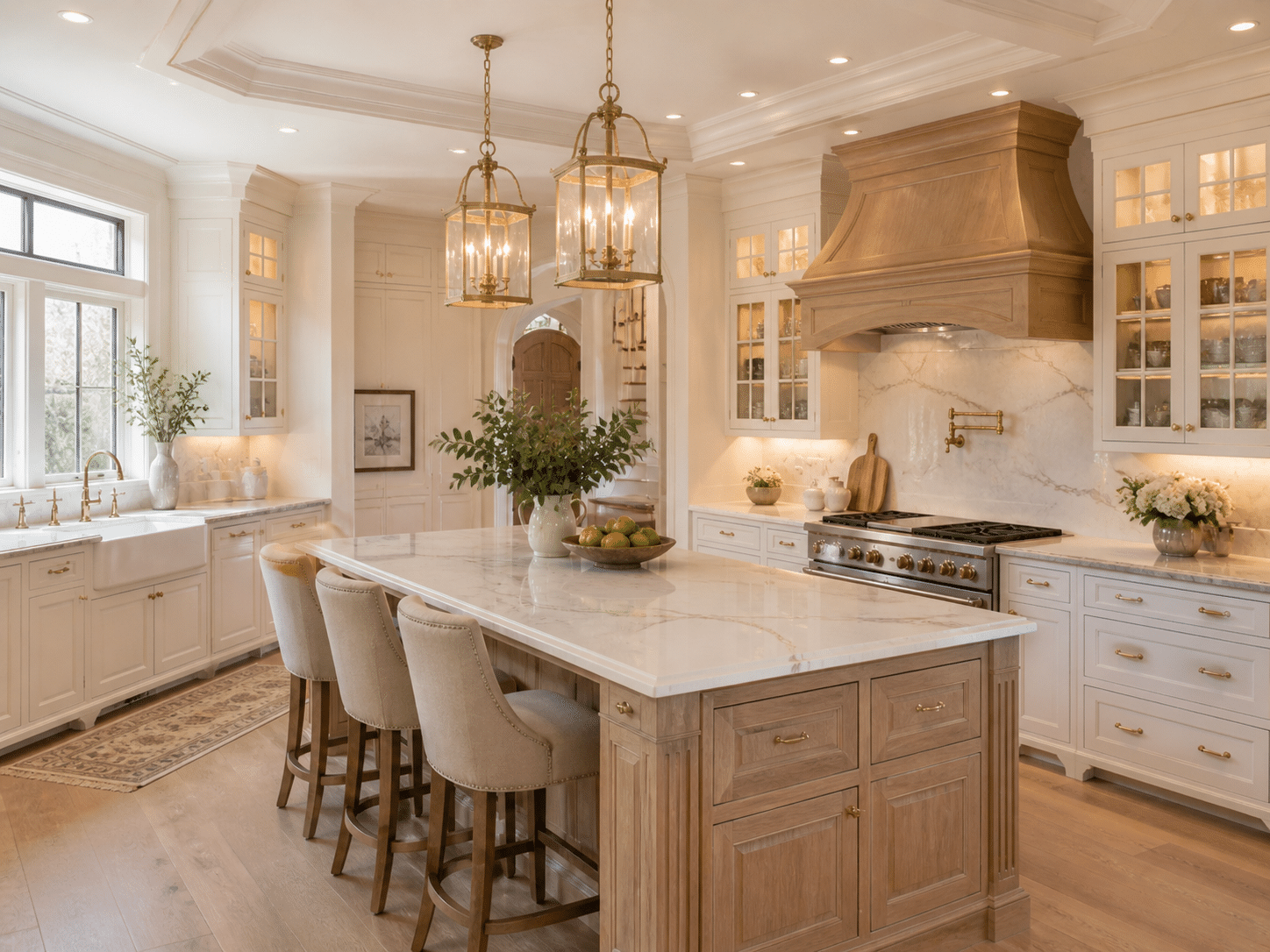
For painted cabinets, MDF, maple, and birch are strong options. MDF provides a smooth surface and is budget-friendly. Maple offers better durability with a refined painted finish. Birch can work well when properly prepared.
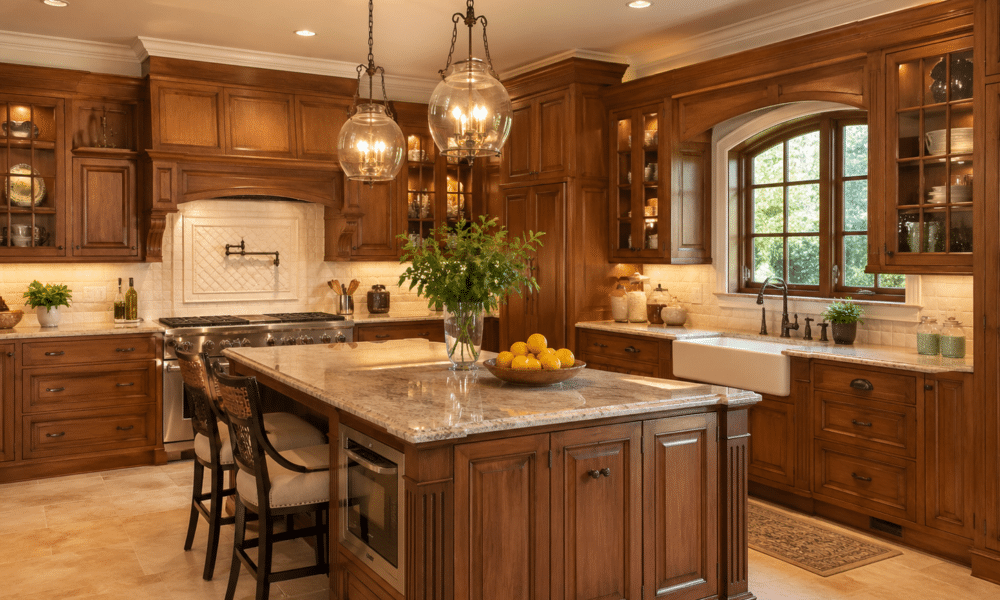
For stained cabinets, oak, walnut, cherry, hickory, and maple are stronger candidates. These woods provide visible grain and natural depth. Walnut creates a luxury look. White oak feels modern and organic. Cherry creates warmth. Hickory creates rustic drama.
A simple rule works well:
Use smooth-grain materials for paint. Use beautiful-grain woods for stain.
Best Cabinet Wood for Budget Remodels
Exploring kitchen cabinet wood types and costs can lead to significant savings and a satisfying remodeling experience.
For a budget remodel, the best choices are usually:
| Budget Option | Why It Works |
|---|---|
| Birch | Affordable hardwood look |
| Oak | Durable and widely available |
| MDF | Excellent for painted doors |
| Plywood boxes | Strong value for cabinet structure |
| Refacing existing cabinets | Lower cost than full replacement |
Cabinet refacing can also be a strong cost-saving strategy when existing cabinet boxes are in good condition. Fixr reports average cabinet refacing costs around $8,250, with many projects ranging from $3,000 to $13,500.
Refacing is not ideal if the layout is poor, the boxes are damaged, or the homeowner wants to change cabinet height, storage configuration, or appliance placement.
Best Cabinet Wood for Luxury Kitchens
In luxury kitchens, selecting the best kitchen cabinet wood types and costs is essential for achieving your desired aesthetic.
For luxury kitchens, the strongest cabinet wood choices are:
| Luxury Option | Best Design Style |
|---|---|
| Walnut | Modern, mid-century, high-end minimalist |
| Cherry | Traditional, classic, formal |
| White oak | Organic modern, Scandinavian, transitional |
| Maple | Painted luxury, transitional, clean modern |
| Rift-sawn oak | Premium contemporary natural wood look |
Walnut is the strongest visual statement. White oak is the trend-forward luxury choice. Maple is the best premium painted option. Cherry is best for classic warmth.
For a luxury kitchen, construction quality matters as much as wood species. Soft-close hardware, dovetail drawers, plywood boxes, inset doors, custom organizers, and premium finishes can elevate the project more than wood selection alone.
Best Cabinet Wood for Resale Value
Focusing on kitchen cabinet wood types and costs can also enhance your home’s resale value.
For resale value, avoid overly polarizing choices. Most buyers prefer cabinets that feel durable, neutral, and compatible with multiple design styles.
The safest resale-friendly options are:
- Maple painted cabinets
- White oak stained cabinets
- Oak cabinets in a modern finish
- Plywood cabinet boxes with hardwood fronts
- Neutral shaker-style cabinets
- Walnut accents instead of full walnut kitchens
A kitchen does not need the most expensive cabinets to attract buyers. It needs cabinetry that looks clean, functional, durable, and current.
Cost Factors That Affect Kitchen Cabinet Pricing
Cabinet wood type is only one part of the final cost. Several other factors can change the price significantly.
Cabinet Grade
Stock cabinets are the most affordable. Semi-custom cabinets allow more sizing, color, and storage options. Custom cabinets offer the most flexibility but cost the most.
Kitchen Size
A small galley kitchen may need far fewer linear feet than a large open-concept kitchen with an island, pantry wall, and built-in appliances.
Door Style
Slab doors are often simpler. Shaker doors are widely available. Inset doors, raised panels, fluting, glass inserts, and applied molding increase cost.
Finish
Paint, stain, glaze, distressing, and specialty finishes can change the final quote. High-quality painted finishes require proper sanding, priming, spraying, and curing.
Hardware
Soft-close hinges, premium drawer slides, pull-outs, lazy Susans, spice racks, tray dividers, and hidden trash systems add convenience but increase cost.
Labor and Location
Installation labor varies by region. Urban markets and high-cost metro areas usually have higher labor rates than smaller markets.
Layout Complexity
Cabinets around corners, ceiling-height designs, appliance panels, range hoods, islands, and custom pantry systems can all increase the total cost.
Final Recommendation
The best kitchen cabinet wood depends on the homeowner’s budget, design goal, and durability needs.
For the best overall value, choose plywood cabinet boxes with maple, oak, or birch doors. This combination offers strength, reasonable cost, and broad design flexibility.
For painted cabinets, choose maple or MDF. Maple is more durable. MDF is smoother and more affordable.
For stained cabinets, choose white oak, walnut, cherry, or hickory depending on the desired style. White oak feels modern and timeless. Walnut feels luxurious. Cherry feels classic. Hickory feels rustic and bold.
For budget remodels, choose birch, oak, MDF, or cabinet refacing.
For luxury remodels, choose walnut, white oak, cherry, or custom maple cabinetry.
The smartest choice is not always the most expensive cabinet wood. The best choice is the material that fits the kitchen’s daily use, climate, maintenance expectations, and long-term design direction.
FAQs About Kitchen Cabinet Wood Types and Costs
Join the conversation about kitchen cabinet wood types and costs to make the best choice for your home.
What is the most affordable wood for kitchen cabinets?
Understanding kitchen cabinet wood types and costs will help guide your selection process.
Birch, pine, and oak are usually among the more affordable wood options. MDF is often cheaper than natural wood and is a strong option for painted cabinet doors.
What is the best wood for painted kitchen cabinets?
Maple is one of the best woods for painted cabinets because it is durable and has a smooth grain. MDF is also excellent for painted finishes because it creates a very smooth surface, but it must be well sealed to resist moisture.
What is the best wood for stained kitchen cabinets?
Oak, walnut, cherry, hickory, and white oak are excellent choices for stained cabinets. These woods have natural grain patterns that add depth and character.
Are plywood cabinets better than MDF cabinets?
Knowing the pros and cons of different kitchen cabinet wood types and costs is essential for a successful remodel.
Plywood is generally better for cabinet boxes because it is stronger and more moisture-resistant. MDF can be better for painted cabinet doors because it has a smoother surface.
Are walnut cabinets worth the cost?
For achieving the desired look, understanding kitchen cabinet wood types and costs is crucial.
Walnut cabinets can be worth the cost in luxury kitchens where appearance, grain, and architectural character are top priorities. For budget remodels, walnut is usually too expensive.
What cabinet wood adds the most resale value?
Maple, white oak, and high-quality painted cabinets usually have strong resale appeal because they look clean, durable, and broadly attractive. Neutral finishes are safer than highly customized colors or dramatic wood tones.
In summary, kitchen cabinet wood types and costs significantly influence your overall kitchen design.