


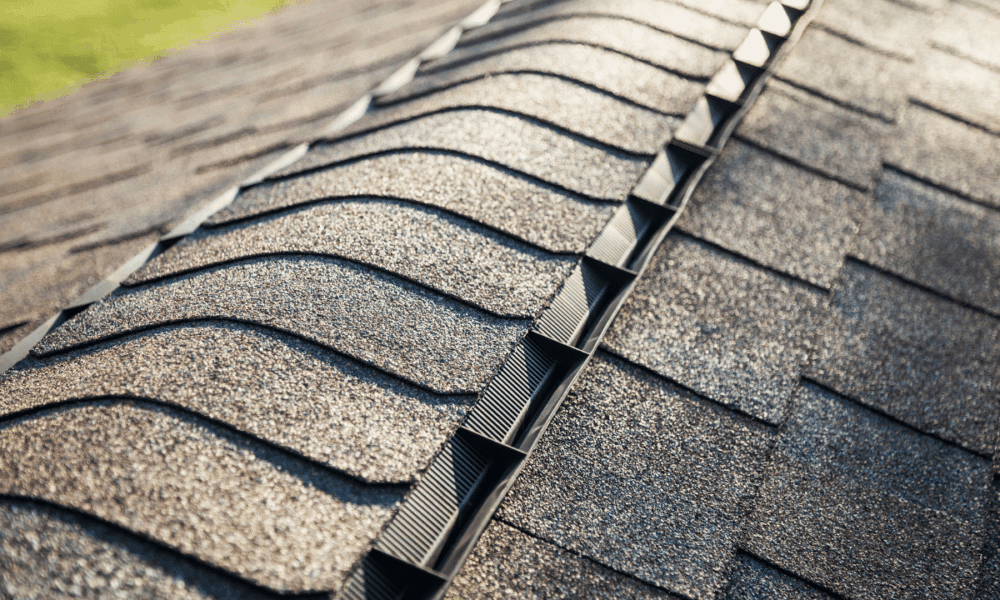
Your house needs to breathe – And without proper ventilation, it will not be able to expel air from the roof. It can cause a host of problems, including mold and condensation – especially during the winter months.
Roof ridge venting is a continuous ventilation system installed along the peak of a roof to facilitate the escape of hot, moist air from the attic. This method helps regulate attic temperature, reducing heat buildup in summer and preventing moisture accumulation in winter, which can extend the roof's lifespan and lower energy consumption. While effective, proper installation is crucial to prevent leaks, and its performance relies on a balanced airflow system that includes adequate soffit ventilation.
Table Of Content
- Exploring Roof Ridge Venting: Pros and Cons for Your Home
- Pro: The Roofing Venting Balances the Home Temperature
- Con: High ridge roof vent cost
- Pro: The Visual Appeal is Awesome
- Con: They Fail To Provide Proper Ventilation When Compared To Other Types of Roof Vents
- Pro: Pests Cannot Get Into the Ridge Ventilation
- Con: They May Leak Water during Heavy Rains
- Pro: Air Moves Out Naturally Out Of the Attic
- Con: It May Not Work In Warmer Regions
- Pro: It Reduces Indoor Pollution
- Con: Must Install on Peaks
- Pro: They Work Well Alone
- Con: Complex Installation
- Pro: Weather Changes Do No Effect Ventilation
- Con: Shingled Roofs Work Well
- Conclusion
Exploring Roof Ridge Venting: Pros and Cons for Your Home
Luckily, most modern homes come with a proper ventilation system, but if you own an old estate, the chances are that it lacks roof ridge Venting. In this case, you have no other choice but to get the ridge roof vent installed to keep up with the changing environment.
However, there are concerns about this type of roof vent. And to ease those concerns, we have compiled a list of roof ridge vent pros and cons to help you decide the future of your roof. So without further ado, let’s get on with our list.
How Does Roof Ridge Venting Balance Home Temperature?
Roof ridge venting balances home temperature by allowing warmer air to escape naturally in summer and preventing colder air from entering in winter. This process ensures a comfortable temperature year-round and can help save money on utility bills. The vents' design facilitates the natural escape of warm air, while also securing the home with warmth during colder months.
Furthermore, the vents’ design allows the colder air from entering during the winter months, securing your home with warmth. In return, the process allows your home to be at a comfortable temperature year-round. It helps you to save some money on your utility bills each month as well.
Con: High ridge roof vent cost
The initial cost remains higher when it comes to roof ridge vents. In fact, if you have an older home, you might need to install soffit vents along with the ridge vents – increasing the overall cost.
While roof ridge vents will work as the exhaust system, the soffit vents will take the task of taking in the air and keep your house temperature optimal. However, with both the protocols, you can expect the cost to go a little higher than expected. Experts say that complete replacement of roof may put you back $1000 or more, depending on the size of your roof and structure.
Does Roof Ridge Venting Improve Home Visual Appeal?
Yes, roof ridge venting can improve your home's visual appeal by working well with its design, boosting its overall aesthetic, and maintaining a sleek look. The pitch of your structure remains unaffected, and installing them along every ridge enhances ventilation. Home with ridge ventilation may also see an increase in monetary value due to this design element.
However, the pitch of your structure remains unaffected by this piece of design. You can also install them along every ride of your roof – providing your home with enhanced ventilation. Home with ridge ventilation installed can also expect an increase in their monetary value, thanks to the design element.
When Do Roof Ridge Vents Provide Less Effective Ventilation?
Roof ridge vents may provide less effective ventilation when the home's overall structure lacks energy efficiency, if air movements are not directed towards the vent, or if baffles are not properly installed. For optimal ventilation, air must circulate effectively towards the vent, and some homes require baffles to ensure the system works as intended, otherwise, it may not perform as desired.
Some homes also need to have baffles installed for correct ventilation. If you don’t have them installed, the ventilation will not work as intended, and your money will go down the drain.
Pro: Pests Cannot Get Into the Ridge Ventilation
Pests such as squirrels, rats, and raccoons love getting into homes every chance they get. They are not only a nuisance to have but can also carry a wide range of diseases, including food poisoning bacteria in your home.
This is why many people choose to install traps or blockage points in their attic insulation to prevent them from entering the home.
However, the protective element reduces the amount of air movement inside the house and reduces the comfortable temperature that you expect in your home.
Luckily, the ridge roof vent protects your home from all disturbances, thanks to its unique size, shape, and layout. The ridge vent makes it nearly impossible for the rodents to enter your house and, in return – provide you with the necessary ventilation without any risk of damage.
Can Roof Ridge Vents Leak Water During Heavy Rains?
Yes, roof ridge vents may leak water during heavy rains, especially in homes located in storm-prone areas. Homeowners should regularly inspect their attic for damages. The primary solution to prevent this issue is to replace the ridge vents with a more water-tight roofing element. This problem can be exacerbated if attic insulation is present, as dampness can lead to further complications.
Unfortunately, the only way to prevent the problem is to take the ridge vents out and install a more water-tight element on your roof. The problem can worsen if you have insulation installed in your attic, as the dampness caused by them can increase the hurdles faced by homeowners.
How Do Roof Ridge Vents Naturally Remove Hot Air From the Attic?
With roof ridge vents installed properly, you can expect the hot air to move out of the attic naturally. Because of the changes in air pressure, the inside air will flow through the ridge vest located underneath the cap shingles to escape from the side and into its natural environment.
This way, you will draw in fresher air inside the home and freshen the indoors more effectively.
Are Roof Ridge Vents Effective in Warmer Climates?
No, roof ridge vents are generally less effective in warmer climates compared to colder ones, though they can still offer some benefit during summer months. They tend to work better where the climate is colder, as attic ventilation benefits more from such conditions. For warmer regions, cheaper and more effective alternatives are often available. In colder environments, rigid insulation is recommended to prevent condensation and moisture damage.
This is because, generally, it is said that the colder the climate of your area, the more your attic can benefit from the use of ventilation.
However, if you live in a warmer region, you can still expect to benefit during the summer months. But yes, there are cheaper and more effective alternatives available for those who reside in warmer areas when compared.
On the other hand, if you do live in a colder environment, then make sure to have rigid insulation in place. This will prevent condensation from forming on your roof and prevent any moisture damage from entering your home.
How Do Roof Ridge Vents Reduce Indoor Air Pollution?
Around 90 percent of Americans spend their time indoors, where some pollutants are often two to five times higher than the typical outdoor environment. Unfortunately, some homes have indoor air quality that is 100 times worse due to improper ventilation.
We also know that indoor air pollution is ranked as one of the five most dangerous environmental factors we face today. Since the average person spends most of the time inside his home, it is one of the most important factors to tackle.
Thankfully, with ridge vent installation, you can improve the quality of your indoor. This also means that with the help of roof ridge vents, you can reduce the risk of several pollution-related ailments, including asthmas, cogging, sinus, and wheezing.
What Roof Types Are Compatible with Ridge Vent Installation?
Unfortunately, the shape of the roof also impacts the installation of ridge vents. If your home has a flat roof, you will not install these ridges in any way. This is because they need slanted pitches on the roof that are not too steep.
The ridges should also be installed on each location on your roof, and having only one installed – if there are multiple options available will reduce its effectiveness.
Can Roof Ridge Vents Be Effective as Standalone Ventilation?
Yes, roof ridge vents can be highly effective as standalone ventilation. Even without soffit or box vents, they efficiently release moisture from the house, particularly during winter months, thereby reducing mildew and dampness. This standalone capability is especially beneficial in high-moisture areas like the Pacific Northwest of the USA or Canada, and for homes experiencing high levels of condensation on windows, preventing mold and mildew.
Even when installed as a standalone ventilation element, the roof ridge venting will release all the moisture from the house, especially during the winter months – reducing the occurrence of mildew and dampness in your home.
Notably, if you live in areas that get high moisture, such as the pacific northwest of the USA or Canada, the roof ridge vents work well in stopping mildew and mold from appearing in your home.
This will also work for homes that have high levels of condensation. If you have lots of condensation on your windows, then you can benefit from this type of roof venting considerably.
Con: Complex Installation
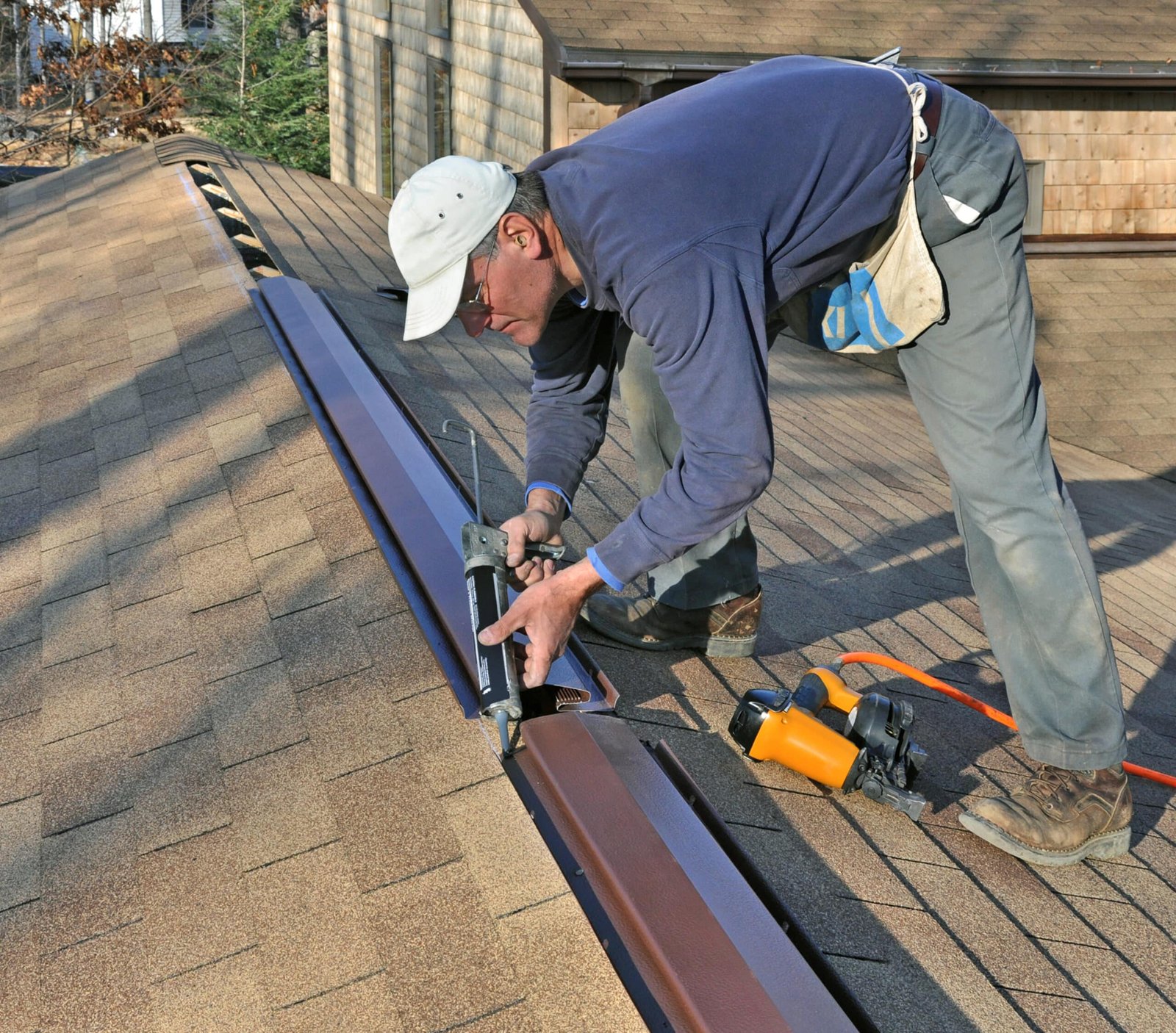
The installation of these vents is not simple – at all and requires proper installation by professional staff. If done incorrectly, you can run the serious risk of damaging your roof. This is because an inexperienced person can cut the ridge gaps too large, allowing the rainwater to seep inside from the attic.
On the other hand, those who cut the gaps too small can hinder airflow, making the element inefficient.
In simple words, you must seek help from a professional who has experience installing these types of roofs to do the work on your behalf. Additionally, this is in no way a DIYer’s task, so avoid trying to do it yourself without proper knowledge.
Are Roof Ridge Vents Affected by Weather Changes?
When you look at ridge vents vs. roof vents, the ridge products are designed to work year-round – without hindrance, provided that they are installed correctly.
Since they blend well with the roof elements, the weather changes that occur in your region do not affect the efficiency of the ridge vents, and they continue to provide the ideal circulation in and around the house.
What Roofing Materials Are Best for Ridge Vent Installation?
Shingle roofs are ideal for ridge vent installation, while ridge vents may not work on some other roofing material types. Although installation is possible on tiled roofs, it typically incurs a steeper price. It is crucial to consult with a professional before installing ridge vents to ensure your roof's material is suitable for the product.
In any case, consult with a professional before deciding to install the ridge vents in your roof to ensure you have the right type of roofing material to hold the product.
Conclusion
These were just some roof ridge vent pros cons you should consider before having one installed.
Most homeowners don’t give a thought to their roofing construction. However, it is important to prevent damages to your roof and provide your home with comfortable indoor air quality.
And with our list of helpful tips, we are sure you will make the right decision to provide you with adequate home maintenance. Good luck!