
Introduction to Home Staircases
Home staircases are the unsung heroes of residential architecture, serving as both functional necessities and potential showpieces. These vertical pathways connect different levels of a home, creating a seamless flow between spaces. Beyond their practical purpose, staircases can be striking design elements that set the tone for your entire home’s aesthetic.
Table Of Content
- Introduction to Home Staircases
- 1. Straight Staircases
- 2. L-Shaped Stairs
- 3. U-Shaped Stairs
- 4. Spiral Staircases
- 5. Curved Staircases
- 6. Floating Stairs
- 7. Ladder Stairs
- 8. Alternating Tread Stairs
- 9. Bifurcated Stairs
- 10. Cantilever Stairs
- 11. Glass Staircases
- 12. Concrete Stairs
- 13. Wooden Staircases
- 14. Metal Staircases
- 15. Combination Material Stairs
- Accessibility Considerations
- Safety Features
- Lighting for Staircases
- Maintenance and Care
- Choosing the Right Staircase
- Conclusion
In the realm of interior design, stairs occupy a unique position. They’re not just transitional spaces; they’re opportunities for artistic expression and architectural innovation. From classic straight flights to avant-garde floating steps, the variety of home staircases designs available today is truly staggering.
1. Straight Staircases
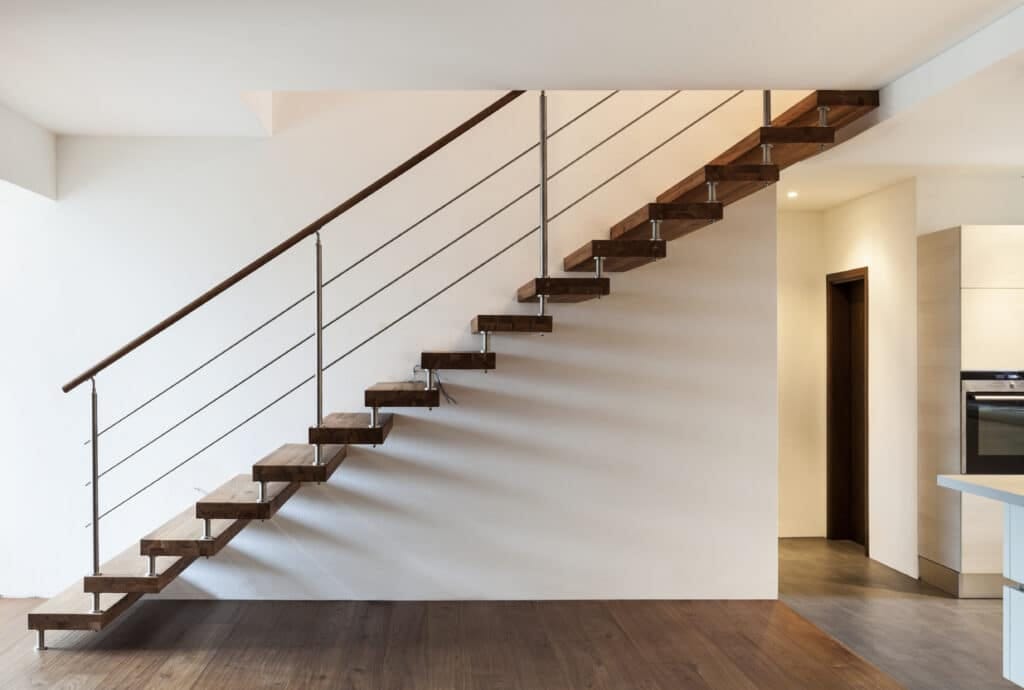
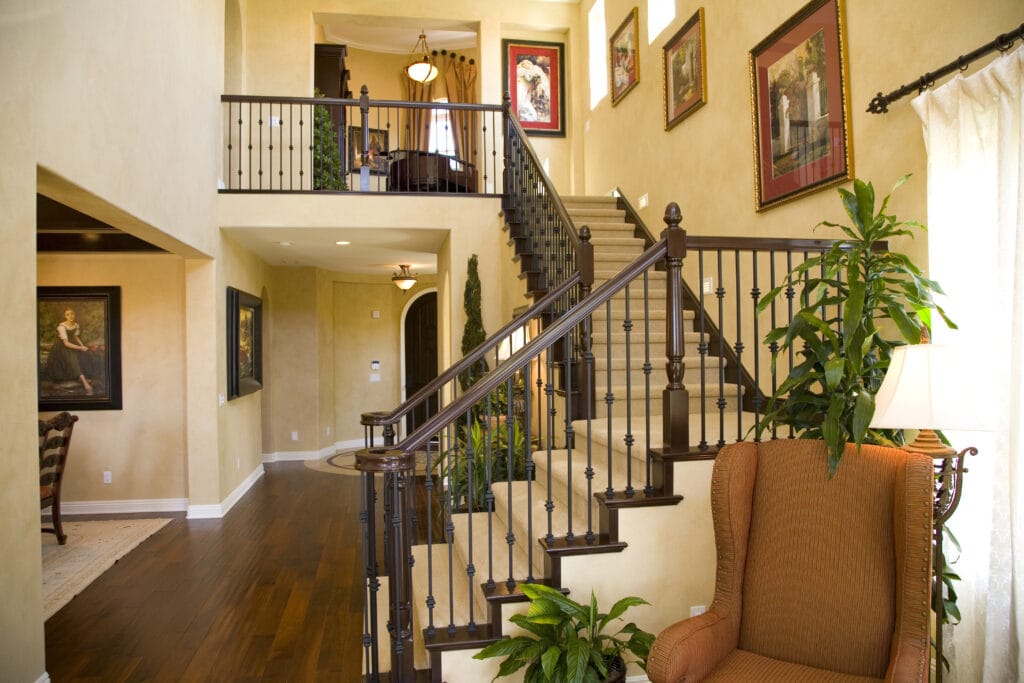
Straight staircases are the quintessential stair design, beloved for their simplicity and efficiency. These linear ascenders typically rise without changing direction, making them a paragon of straightforward functionality.
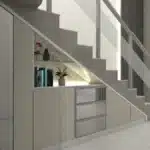
One of the primary advantages of straight stairs is their space efficiency. They require minimal floor area, making them ideal for homes where square footage is at a premium. Additionally, their uncomplicated design often translates to easier construction and lower costs. However, don’t mistake simplicity for dullness – straight staircases can be elevated with exquisite materials or innovative balustrade designs.
2. L-Shaped Stairs
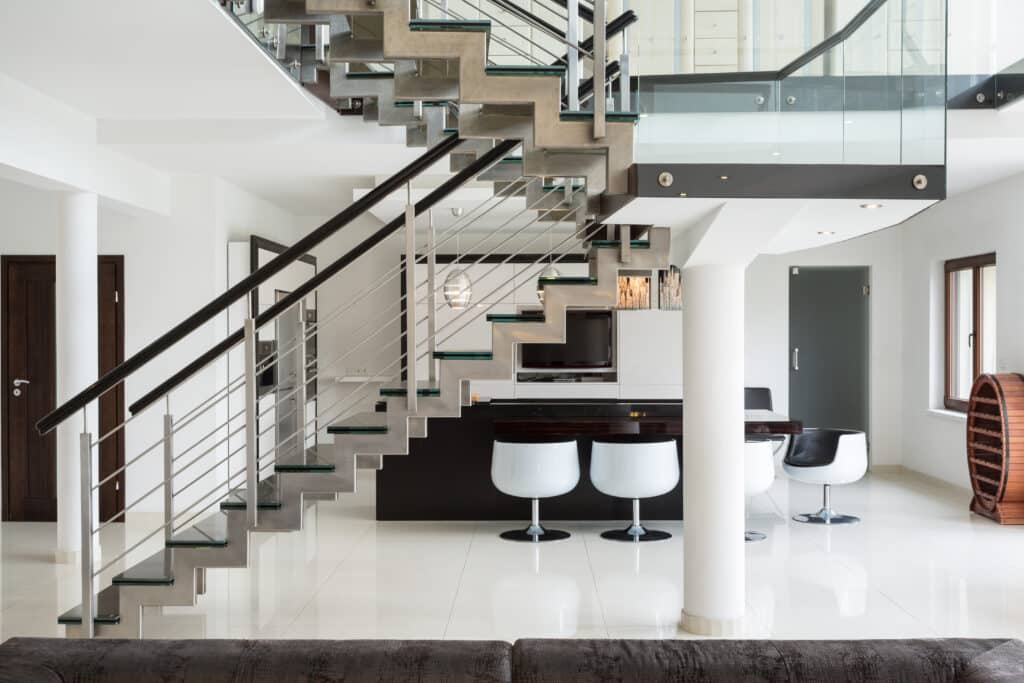
L-shaped stairs, as their name suggests, incorporate a 90-degree turn, typically with a landing at the pivot point. This configuration breaks the ascent into two distinct flights, creating a visual pause in the journey between floors.
The inclusion of a landing in L-shaped stairs offers several benefits. It provides a natural resting point, which can be particularly appreciated in multi-story homes. From a design perspective, the landing also presents an opportunity for decorative elements such as artwork or plants. L-shaped stairs are adept at fitting into corner spaces, making them a popular choice for homes where spatial economy is crucial.
3. U-Shaped Stairs
U-shaped stairs take the concept of L-shaped stairs a step further, incorporating two 180-degree turns. This design essentially folds the staircase back on itself, creating a U-shaped configuration when viewed from above.
The compact footprint of U-shaped stairs makes them an excellent choice for multi-story homes with limited floor space. The two landings inherent in this design offer welcome respite during ascent and descent. Moreover, the enclosed nature of U-shaped stairs can provide enhanced privacy and noise reduction between floors, a boon for family homes or properties with multiple occupants.

4. Spiral Staircases
Spiral home staircases are the acrobats of the stair world, twirling upward in a mesmerizing helix. These space-saving marvels rotate around a central pole, with treads radiating outward like the petals of a flower.
The compact nature of spiral stairs makes them ideal for tight spaces or as secondary access points. They’re particularly popular in loft conversions or as access to roof terraces. While undeniably charming, it’s worth noting that spiral stairs can be challenging for moving large items between floors and may not be suitable for households with mobility concerns.
5. Curved Staircases
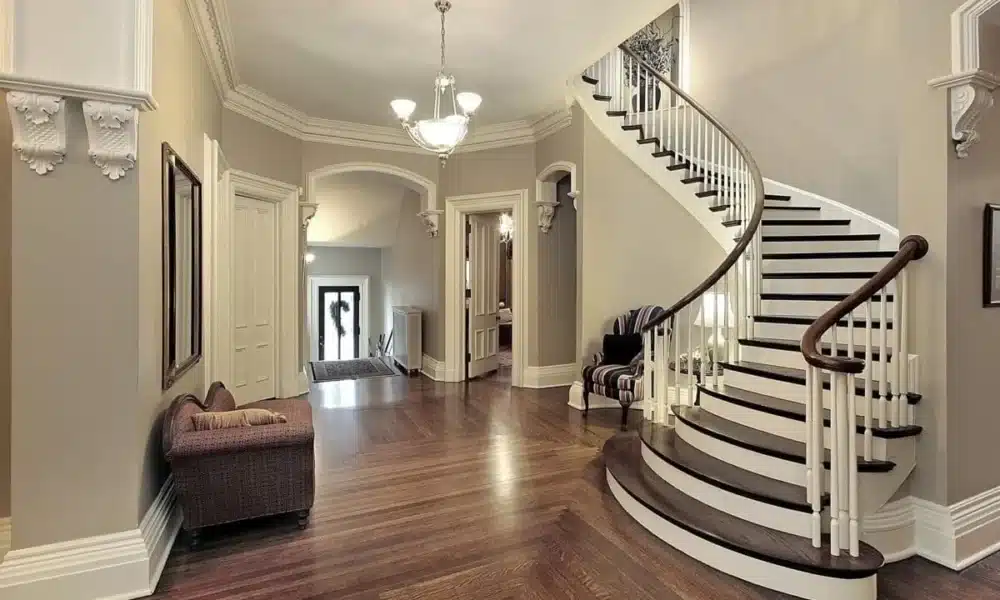
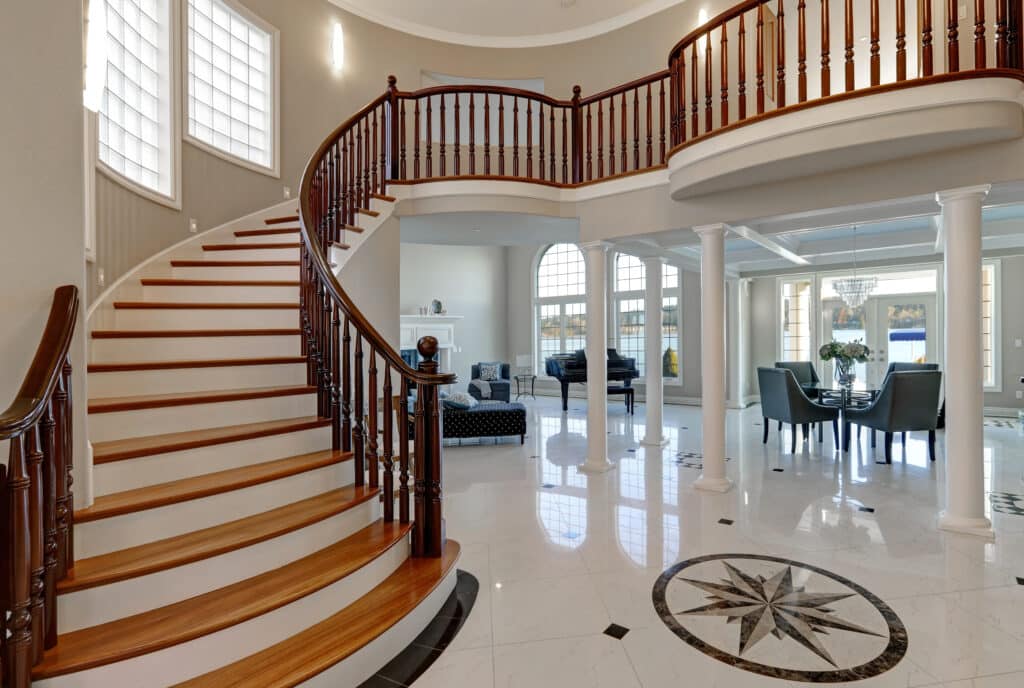
Curved staircases are the epitome of elegance in stair design. These sinuous structures sweep gracefully between floors, often serving as a captivating focal point in grand entryways or open-plan living spaces.
The smooth, continuous line of a curved staircase creates a sense of flow and movement within a home. While undoubtedly beautiful, curved stairs are among the most complex and costly to construct, often requiring custom-made components. However, for those seeking a truly show-stopping architectural feature, a well-designed curved staircase is hard to beat.
6. Floating Stairs
Floating stairs, also known as cantilever stairs, create an illusion of weightlessness. These modern marvels appear to defy gravity, with treads that seem to float in mid-air, often attached to a hidden steel structure within a wall.
The minimalist aesthetic of floating stairs makes them a favorite in contemporary homes. They create a sense of openness and light, allowing unobstructed sightlines through the stairwell. However, the seeming simplicity of floating stairs belies the complex engineering required to ensure their safety and stability.
7. Ladder Stairs
Ladder stairs represent the ultimate in space-saving vertical access. These steep, narrow stairs closely resemble a ladder, often with alternating treads to maximize the climbing angle.
While not suitable as a home’s primary staircase, ladder stairs excel in specific applications. They’re often used to access loft spaces, mezzanines, or even as quirky features in tiny homes. It’s crucial to note that ladder stairs typically don’t meet building codes for main home staircases and should be used judiciously.
8. Alternating Tread Stairs
Alternating tread stairs are the clever cousins of ladder stairs. They feature a unique design where each step is deeper on one side, alternating left and right as you ascend. This allows for a steeper climb while still providing adequate foot support.
The distinctive design of alternating tread stairs makes them an interesting visual feature. However, their unconventional nature means they’re best suited for occasional use, such as accessing a loft or roof space. As with ladder stairs, it’s essential to check local building codes before incorporating alternating tread stairs into your home design.
9. Bifurcated Stairs
Bifurcated stairs, also known as split stairs, start as a single flight before diverging into two separate flights, often curving in opposite directions. This grand design is frequently seen in palatial homes and upscale hotels.
The dramatic impact of bifurcated stairs makes them a natural choice for creating an impressive entrance. They work particularly well in homes with large, open foyers. However, the substantial space required for bifurcated stairs means they’re not suitable for more modest dwellings.
10. Cantilever Stairs
Cantilever stairs take the concept of floating stairs to the next level. In this design, each tread is anchored to the wall at only one end, creating a striking cantilever effect. The result is a staircase that seems to defy the laws of physics.
The bold, contemporary look of cantilever stairs makes them a favorite among architects and designers pushing the boundaries of modern home design. However, the complex engineering required for safe installation means cantilever stairs are often a high-end option.
11. Glass Staircases
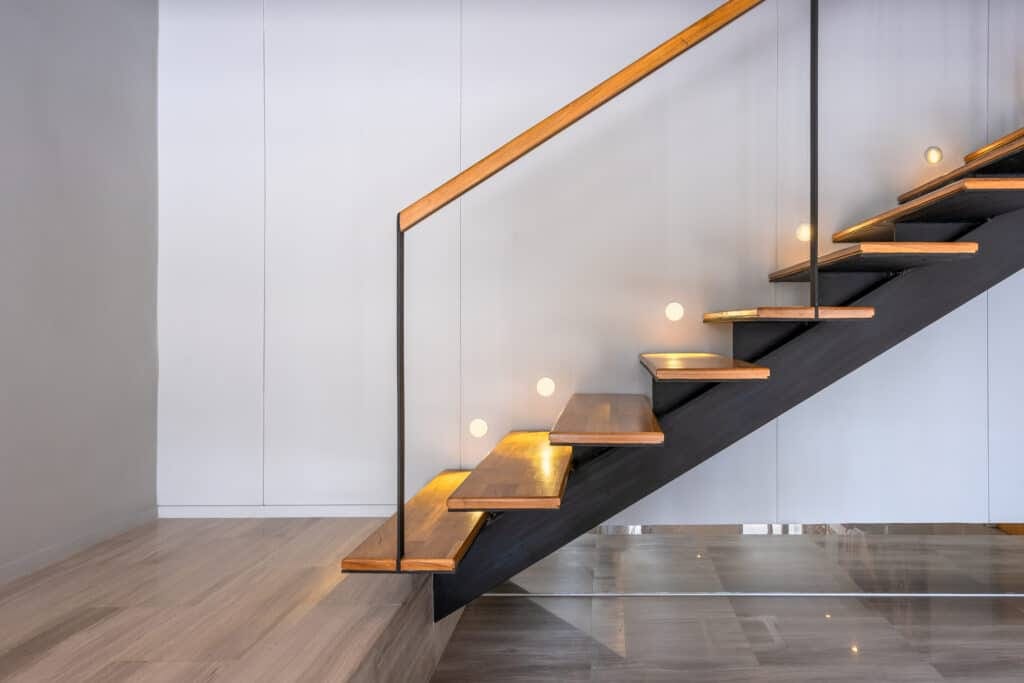
Glass home staircases bring a touch of ethereal elegance to any home. Whether featuring glass treads, balustrades, or both, these transparent beauties create a sense of openness and light.
The use of glass in stair design allows for unobstructed views and can make a space feel larger. However, it’s crucial to use specially treated, high-strength glass to ensure safety. Regular cleaning is also necessary to maintain the pristine look that makes glass stairs so appealing.
12. Concrete Stairs
Concrete home staircases offer a perfect blend of durability and design flexibility. These robust structures can be molded into various shapes, from straight flights to sweeping curves.
The inherent strength of concrete makes it an excellent choice for high-traffic areas. Concrete stairs can be left raw for an industrial look or finished in numerous ways to suit any aesthetic. From polished surfaces to embedded decorative elements, the design possibilities with concrete stairs are virtually limitless.
13. Wooden Staircases
Wooden home staircases bring warmth and natural beauty to a home. The versatility of wood allows for a wide range of styles, from rustic to refined.
The choice of wood species can dramatically affect the look of your stairs. Oak offers durability and a prominent grain, while maple provides a smoother, more uniform appearance. Exotic hardwoods like mahogany or teak can lend a touch of luxury. With proper care, a well-crafted wooden staircase can last for generations.
14. Metal Staircases
Metal staircases offer a perfect blend of strength and style. Whether crafted from steel, aluminum, or wrought iron, metal stairs can suit a variety of design aesthetics.
The inherent strength of metal allows for sleek, minimalist designs with slim profiles. Industrial-style homes often feature exposed metal stairs, celebrating the material’s raw beauty. For a softer look, metal can be combined with wood treads or glass balustrades.
15. Combination Material Stairs
Combination material stairs blend different elements to create unique and personalized designs. This approach allows for endless creativity, mixing and matching materials to suit your taste and home’s style.
Popular combinations include wood treads with metal risers, glass treads with wooden handrails, or concrete bases with metal balustrades. The key to successful combination stairs lies in finding the right balance between materials, ensuring they complement rather than clash with each other.
Accessibility Considerations
When designing stairs, it’s crucial to consider accessibility for all potential users. This might involve incorporating ramps alongside or instead of stairs, or installing stairlifts for those with mobility challenges.
Universal design principles encourage creating spaces that are usable by people of all ages and abilities. This might mean opting for stairs with lower risers and deeper treads, or ensuring handrails are easy to grip and extend beyond the top and bottom steps.
Safety Features
Safety should be paramount in any stair design. Handrails provide crucial support and are often required by building codes. Balusters, the vertical posts supporting the handrail, should be spaced closely enough to prevent small children from slipping through.
Non-slip treatments on stair treads can significantly reduce the risk of falls. This could involve applying anti-slip strips, using naturally textured materials, or incorporating a slight slope on tread surfaces to prevent water pooling.
Lighting for Staircases
Proper lighting is essential for both the safety and aesthetics of your home staircases. Functional lighting ensures each step is clearly visible, reducing the risk of trips and falls. This can be achieved through overhead fixtures, wall sconces, or integrated LED strips.
Decorative lighting can transform your staircase into a stunning feature. Consider pendant lights in a multi-story stairwell, or subtle uplighting to create drama and ambiance. Smart lighting systems can offer both practical illumination and mood-setting capabilities.
Maintenance and Care
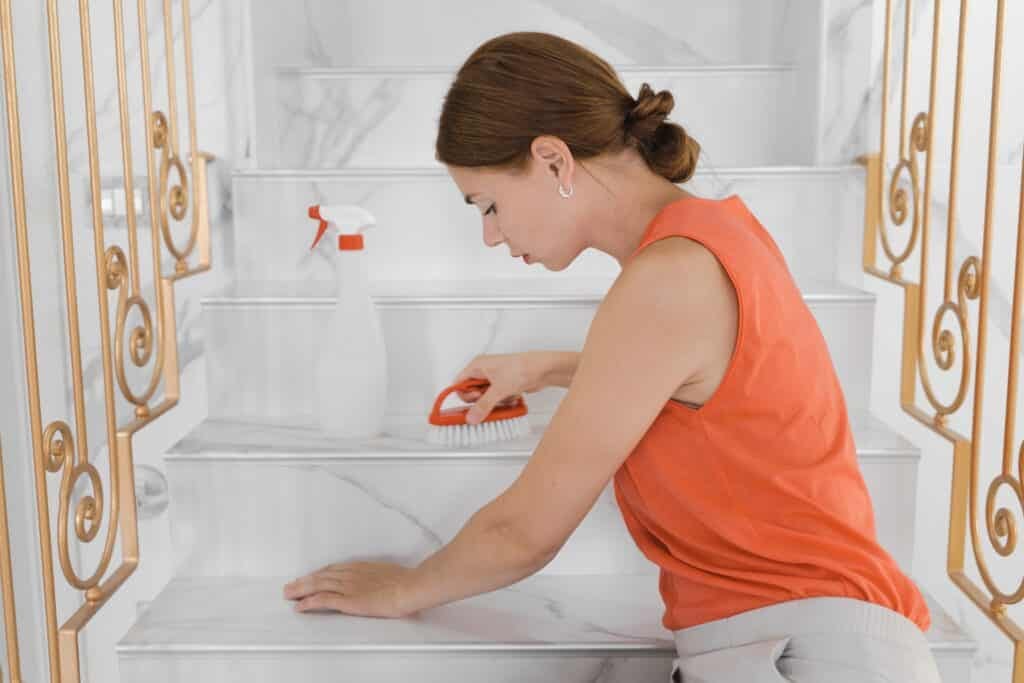
Regular maintenance is key to preserving the beauty and functionality of your stairs. This includes routine cleaning appropriate to the stair material, tightening any loose fixings, and promptly addressing any signs of wear or damage.
Long-term preservation might involve periodically refinishing wooden stairs, resealing concrete, or touching up paint on metal components. For glass stairs, using appropriate cleaning products is crucial to prevent scratching or clouding of the surface.
Choosing the Right Staircase
Selecting the ideal home staircases for your home involves careful consideration of your space, lifestyle, and aesthetic preferences. Assess your available space first – this will immediately narrow down your options. Consider the architectural style of your home and choose a stair design that complements it.
Think about who will be using the stairs regularly. If you have young children or elderly family members, safety and ease of use should be top priorities. Finally, consider your budget – while all staircases represent a significant investment, some designs and materials are more cost-intensive than others.
Conclusion
The right staircase can elevate your home in more ways than one. Beyond their fundamental role in vertical circulation, stairs have the power to define spaces, create visual interest, and even become conversation pieces in their own right.
Thoughtful stair selection can significantly impact both your home’s value and its day-to-day functionality. Whether you opt for the timeless elegance of a curved wooden staircase or the modern minimalism of floating glass treads, your choice will play a crucial role in shaping your home’s character.
Remember, your perfect home staircases is out there – it’s just a matter of finding the design that resonates with your personal style, meets your practical needs, and fits seamlessly into your home. So take that first step, explore your options, and prepare to elevate your home with the perfect staircase.