



An epoxy floor can turn bare basement concrete into a clean, durable, easy-to-maintain surface, but the coating is only as reliable as the preparation underneath it. Many epoxy basement floor mistakes happen before the first gallon is even mixed: unnoticed moisture, poorly cleaned concrete, incompatible coatings, or rushing surface preparation. Others occur during application when temperature, mixing ratios, working time, or coat thickness are ignored. Below, My NEXT HOUSE PROJECT breaks down the mistakes that most often compromise basement epoxy floors and explains how to avoid them before they become expensive repairs.
Table Of Content
- Why Epoxy Basement Floor Mistakes Usually Start With Preparation
- 1. Applying Epoxy Over Moist Basement Concrete
- 2. Skipping Proper Concrete Surface Preparation
- 3. Coating Over Old Paint, Sealer, or Adhesive
- 4. Ignoring Cracks and Damaged Concrete
- 5. Choosing the Wrong Epoxy Product for a Basement
- 6. Mixing Epoxy Incorrectly
- 7. Mixing More Epoxy Than You Can Apply
- 8. Applying Epoxy Outside the Recommended Temperature Range
- 9. Rolling Epoxy Too Thick or Too Thin
- 10. Waiting Too Long Between Epoxy Coats
- 11. Using the Basement Before the Floor Has Fully Cured
- DIY Epoxy Basement Floor or Professional Installation?
- Before You Apply Epoxy: A Basement Floor Checklist
- 7. Key Takeaways
- 8. FAQ Section – People Also Ask
- Why is my epoxy basement floor peeling?
- Can you put epoxy directly over a concrete basement floor?
- Can epoxy fix cracks in a basement floor?
- Why are bubbles forming in my epoxy floor?
- Does basement concrete need to be ground before epoxy?
- How long should epoxy cure before putting furniture on it?
- Can you apply another coat of epoxy over old epoxy?
Why Epoxy Basement Floor Mistakes Usually Start With Preparation
Epoxy is not simply thick floor paint.
Most epoxy flooring systems rely on a chemical reaction between a resin and a hardener. Once mixed, the coating begins curing. Successful installation therefore depends on several conditions lining up correctly: the concrete must be sound, sufficiently dry, clean, properly profiled, and compatible with the coating system.
That is why a beautifully rolled epoxy floor can still fail.
The visible coating may be the final step, but concrete preparation determines whether it stays attached.
Here are the mistakes homeowners should pay particular attention to.
1. Applying Epoxy Over Moist Basement Concrete
Moisture is one of the most important issues to investigate before coating a basement slab.
Concrete can transmit moisture even when the surface appears dry. A basement may also have moisture caused by drainage problems, plumbing leaks, high humidity, groundwater, or previous water intrusion.
Applying epoxy without addressing the underlying condition can contribute to:
- bubbling
- blistering
- cloudy areas
- loss of adhesion
- peeling or delamination
Do not assume epoxy will waterproof a basement from the inside.
If you see efflorescence, dark patches, recurring dampness, water staining, or previous coating failure, determine the source before installing another coating.
2. Skipping Proper Concrete Surface Preparation
This is arguably the most expensive shortcut in a DIY epoxy project.
Epoxy needs a surface it can mechanically bond to. Smooth, contaminated, sealed, or weak concrete may prevent proper adhesion.
Depending on the coating system and condition of the slab, preparation may involve:
- removing existing coatings
- degreasing contaminated areas
- repairing damaged concrete
- mechanically grinding the slab
- creating the surface profile specified by the manufacturer
- thoroughly removing dust afterward
Simply sweeping and washing the concrete is rarely equivalent to professional surface preparation.
If you remember only one rule, make it this:
The quality of an epoxy floor begins with the concrete, not the roller.
3. Coating Over Old Paint, Sealer, or Adhesive
Basement slabs frequently have a history.
You may discover old floor paint, adhesive residue, curing compounds, sealers, or previous coatings beneath what looks like ordinary concrete.
These materials can create a bond breaker between the new epoxy and the slab.
Before coating, determine what is actually on the floor.
A previous coating that appears solid in one area may be poorly bonded somewhere else. Installing new epoxy over it means your new floor is only as strong as the weakest layer underneath.
Removal may require grinding or another method appropriate for the existing material.
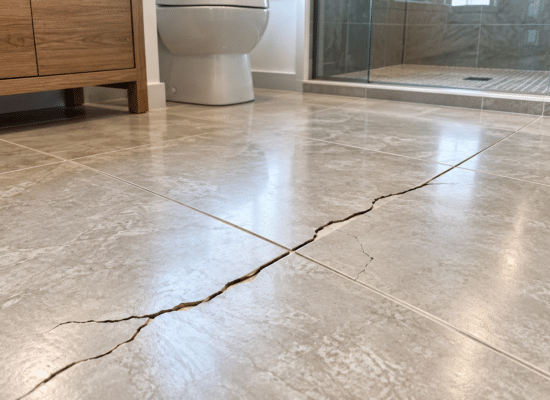
4. Ignoring Cracks and Damaged Concrete
Epoxy can improve the appearance of concrete, but it does not magically repair structural movement.
Small non-moving imperfections may be repairable before coating. Active cracks, recurring movement, significant settlement, or unusual slab damage deserve more careful evaluation.
One common mistake is filling every crack and immediately covering the floor without asking why the crack formed.
If movement continues, the repaired area can telegraph through the new finish.
Repair products must also be compatible with the epoxy system going over them.
5. Choosing the Wrong Epoxy Product for a Basement
Not every product labeled “epoxy” performs the same way.
There are significant differences between:
- professional coating systems
- water-based epoxy products
- high-solids coatings
- decorative epoxy kits
- epoxy primers
- topcoats and protective clear coats
A low-cost kit may work for one application but be unsuitable for another.
Compare products based on the basement conditions and intended use rather than price alone.
For example, a lightly used storage room and a basement workshop experience very different abrasion, impact, and chemical exposure.
Read the manufacturer’s requirements for concrete moisture, surface preparation, application thickness, recoat windows, and environmental conditions before buying.
6. Mixing Epoxy Incorrectly
Epoxy is less forgiving than ordinary paint.
Resin and hardener must generally be combined at the specified ratio and mixed according to the manufacturer’s directions. Guessing the proportions can interfere with curing.
Potential results include:
- soft or sticky areas
- uneven gloss
- premature failure
- incomplete curing
- inconsistent hardness
Avoid casually dividing kits unless the product documentation clearly explains how to measure smaller batches accurately.
Mixing technique matters too. Scraping the sides and bottom of the container and following the specified mixing time helps produce a more uniform mixture.
7. Mixing More Epoxy Than You Can Apply
Once the components are combined, the clock starts.
The period during which mixed epoxy remains workable is commonly called its pot life.
A large batch can become increasingly difficult to spread as it reacts. Waiting too long may produce drag marks, uneven coverage, roller texture, or partially cured material.
For DIY projects, work in manageable sections and organize the room before mixing anything.
Your rollers, brushes, spike shoes if required, decorative flakes, tools, and helpers should already be ready.
Preparation time ends once the epoxy is mixed.
8. Applying Epoxy Outside the Recommended Temperature Range
Basements often feel temperature-stable, but both air temperature and slab temperature matter.
Applying a coating when conditions are outside the manufacturer’s specifications can affect curing, viscosity, adhesion, and finish quality.
Also consider temperature changes during the curing period.
A basement that is comfortable at noon may cool significantly overnight.
Follow the coating manufacturer’s environmental requirements instead of relying on a general assumption that “room temperature” is close enough.
9. Rolling Epoxy Too Thick or Too Thin
More epoxy does not automatically create a stronger floor.
An overly thick application can interfere with curing or create an uneven finish, depending on the product. Applying too little may cause poor coverage, inconsistent appearance, and inadequate film thickness.
Follow the stated coverage rate.
Measure your basement accurately so you can estimate how much material each section should receive.
A consistent application technique is more important than repeatedly rolling areas simply because they look slightly different while wet.
10. Waiting Too Long Between Epoxy Coats
Many coating systems specify a particular recoat window.
Apply the next coat too early and the lower layer may not be ready. Wait too long and additional surface preparation may be necessary to create adequate adhesion.
This becomes especially important when installing:
- primer
- epoxy base coat
- decorative flakes
- clear protective topcoat
Plan the installation schedule before starting.
Do not assume you can simply return “sometime tomorrow” for the next coat without checking the product instructions.
11. Using the Basement Before the Floor Has Fully Cured
A floor may feel dry long before it has reached its intended cure.
Walking on it, dragging furniture across it, installing gym equipment, or moving appliances back too soon can damage the surface.
Different products have different cure schedules.
Follow the manufacturer’s guidance for:
- foot traffic
- furniture
- heavy equipment
- rugs or mats
- full service use
A few extra days of patience can protect hours of preparation and installation work.
DIY Epoxy Basement Floor or Professional Installation?
A DIY epoxy basement floor can make sense when the concrete is in good condition, the project is relatively simple, and the homeowner is comfortable with surface preparation and time-sensitive coating work.
Professional help deserves consideration when the basement has:
- previous coating failure
- significant moisture concerns
- extensive cracks
- difficult adhesive removal
- large or irregular floor areas
- extensive concrete repairs
- a high-finish decorative system
The important distinction is that professional epoxy flooring is not simply professional rolling.
Much of the value comes from substrate evaluation, mechanical preparation, moisture assessment, material selection, and application control.
Before You Apply Epoxy: A Basement Floor Checklist
Before opening the first container, confirm that you have:
- inspected the basement for moisture
- identified previous sealers or coatings
- repaired appropriate cracks and damage
- prepared the concrete to the coating manufacturer’s specifications
- removed grinding dust and contaminants
- checked temperature requirements
- calculated the correct quantity of epoxy
- reviewed mixing ratios
- planned your working sections
- confirmed recoat and cure times
That checklist is considerably less exciting than pouring out a glossy coating.
It is also what separates a promising weekend project from a floor that may begin peeling months later.
7. Key Takeaways
- Most epoxy basement floor mistakes originate with inadequate concrete preparation.
- Epoxy should not be used as a shortcut for unresolved basement moisture problems.
- Existing paint, sealers, adhesives, and weak coatings can prevent proper adhesion.
- Resin and hardener must be mixed according to the specific product instructions.
- Pay attention to pot life, temperature, coat thickness, and recoat windows.
- Do not assume all epoxy flooring kits have the same installation requirements.
- Allow the finished floor to cure properly before replacing furniture or equipment.
- For difficult slabs, professional surface preparation may be more valuable than buying a more expensive coating.
8. FAQ Section – People Also Ask
Why is my epoxy basement floor peeling?
Peeling usually indicates that the coating has lost adhesion to the surface beneath it. Possible causes include moisture, inadequate concrete preparation, contamination, an incompatible existing coating, or improper application. The exact cause should be identified before recoating the floor.
Can you put epoxy directly over a concrete basement floor?
Yes, many epoxy systems are designed for concrete, but the slab normally requires preparation first. The concrete must meet the manufacturer’s requirements for cleanliness, surface profile, condition, and moisture before the coating is applied.
Can epoxy fix cracks in a basement floor?
Epoxy coating itself should not be treated as a crack repair system. Appropriate cracks may be repaired before coating using a compatible repair material. Cracks caused by continuing movement or structural conditions may require further evaluation.
Why are bubbles forming in my epoxy floor?
Bubbles can have several causes, including air introduced during mixing, outgassing from concrete, application conditions, moisture, or installation technique. Determining the cause is important before trying to repair the affected section.
Does basement concrete need to be ground before epoxy?
Mechanical grinding is a common preparation method because it removes contaminants and creates a suitable surface profile. Whether grinding is required depends on the coating system, the existing slab condition, and manufacturer instructions.
How long should epoxy cure before putting furniture on it?
There is no universal curing period for every epoxy product. Follow the manufacturer’s instructions for light foot traffic, furniture placement, and full use. Temperature and environmental conditions can also affect curing.
Can you apply another coat of epoxy over old epoxy?
Sometimes, provided the existing coating is well bonded and the surface is prepared according to the new product’s requirements. Loose, peeling, contaminated, or incompatible coatings should not simply be covered.