


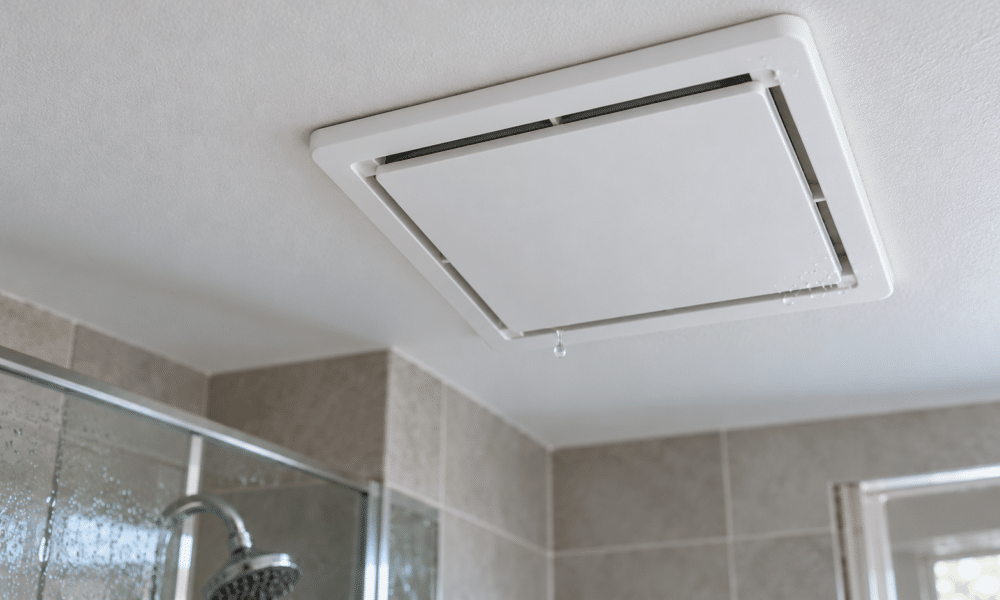
A bathroom fan dripping water in winter can make you suspect a roof leak immediately. Sometimes that suspicion is correct. In other homes, the water begins as shower steam that condenses inside a cold duct or fan housing before falling through the grille. If you notice a bathroom fan dripping water in winter, it’s essential to investigate further.
Table Of Content
- First make the situation safe
- Use the timing to narrow the cause
- Why condensation develops in the exhaust system
- Understanding Bathroom Fan Dripping Water in Winter
- What a contractor should check
- Improve daily moisture removal
- Repair the cause before choosing a replacement
- Compare estimates by scope
- FAQ Section – People Also Ask
- Can a brand-new bathroom fan still drip?
- Does winter dripping always mean condensation or bathroom fan dripping water in winter?
- Should I cover the grille to keep cold air out?
- When can the ceiling be repainted?
The repair depends on where the moisture starts. Replacing a working fan will not necessarily correct a poorly insulated duct, and sealing the bathroom grille will only hide the symptom. Start with the timing of the drip, then have the entire exhaust route checked when the cause remains unclear.
First make the situation safe
If water is actively entering the fan, stop using it and switch off its circuit at the breaker if you can do so safely from a dry location. Do not remove a wet electrical assembly or reach into the housing. Keep people away from a sagging or waterlogged ceiling and arrange professional inspection.
If your bathroom fan is dripping water in winter, it’s crucial to ensure safety first before proceeding with any inspections.
Place a container beneath a small drip only where it is safe to do so. Photograph the stain, grille, and nearby ceiling before cleanup. These pictures help a contractor understand what happened even if the area dries before the appointment.
Use the timing to narrow the cause
Write down whether the drip follows a shower, rainfall, snowfall, or a change in outdoor temperature. A pattern is useful evidence, although it cannot confirm the diagnosis by itself.
During wind-driven rain or bathroom fan dripping water in winter
| When water appears | What to investigate |
| After showers during cold weather | Condensation in the housing or exhaust duct |
| Exterior termination, flashing, or nearby roof leaks | |
| During a thaw after freezing weather | Melting frost, ice-related water entry, or trapped condensate |
| Regardless of weather or bathroom use | Plumbing above the ceiling or another concealed source |
Water can travel along framing before appearing at the fan opening. A stain beside the housing does not establish that the fan itself caused the leak.
Why condensation develops in the exhaust system
Understanding Bathroom Fan Dripping Water in Winter
Warm, moisture-laden bathroom air can deposit water when it contacts a surface cold enough to reach the dew point. This scenario is common and can lead to a bathroom fan dripping water in winter, especially if the duct is not properly insulated.
Panasonic explains that cold-air migration, duct arrangement, outdoor temperatures, and fan operation can all influence winter dripping. This is why two bathrooms in the same house may behave differently.
The useful question is not simply whether the fan turns on. It is whether the installed system moves bathroom moisture outdoors reliably without allowing excessive cooling or collecting water along the way.
What a contractor should check
Understanding the causes of a bathroom fan dripping water in winter will help you address the issue effectively.
Ask for an inspection of the complete route from the grille to the outdoor termination. A quotation that covers only a new motor may leave the actual problem untouched.
The inspection should address duct size, routing, connections, support, insulation, damper operation, and the condition of the exterior cap. Request photographs of inaccessible areas so you can understand the proposed work.
For ductwork passing through cold spaces, ask whether its insulation and outer jacket are continuous and appropriate for the installation. Compressed insulation, uncovered connections, and sagging sections deserve attention. A sag may become a collection point rather than letting the system function as intended.
Have the contractor compare the route with the specific fan’s installation instructions. Avoid accepting a universal recommendation to enlarge or reduce every bathroom duct. The fan, fittings, route length, and termination must work together.
Confirm that the exhaust from your bathroom fan is functioning properly, as a malfunctioning fan can contribute to bathroom fan dripping water in winter.
Improve daily moisture removal
Once the electrical assembly is safe and the system has been checked, use the fan during bathing and allow it to continue afterward. The Home Ventilating Institute recommends approximately 20 minutes of post-use operation. A timer can make this easier to maintain.
Using the fan correctly is vital to prevent a bathroom fan dripping water in winter; ensure it’s operational during and after showers.
Some fans form part of a continuously operating whole-house ventilation system. Follow the intended control settings rather than treating every fan as an occasional shower accessory.
Clean the grille according to the manufacturer’s instructions, with power disconnected. Dust accumulation should be addressed, but cleaning alone will not repair a disconnected duct or a damaged exterior cap. Do not wash the motor or electrical components.
A small hygrometer can help you compare bathroom conditions before and after showers. Record whether humidity returns toward the room’s normal level. Persistent moisture deserves investigation even when the mirror eventually clears.
Repair the cause before choosing a replacement
Before replacing a fan, consider whether the bathroom fan dripping water in winter is due to an external issue or a fault in the fan itself.
A new fan makes sense when the existing unit has failed, suffered water damage, or cannot provide appropriate performance for the bathroom and approved duct arrangement. It is less useful when the main defect is elsewhere.
If replacement is recommended, compare sound ratings, certified airflow, controls, and installation requirements. Our bathroom exhaust-fan guide explains the selection questions to consider after diagnosis.
Ask the installer how performance will be checked once the work is complete. A fan can sound powerful while moving too little air through a restrictive route. Documenting the repair and verifying operation provides a better endpoint than simply hearing the motor run.
Compare estimates by scope
Request separate descriptions for diagnosis, fan replacement, duct corrections, exterior work, and ceiling restoration. Confirm whether electrical work and painting are included. Roof access, attic clearance, and concealed damage can change the work substantially.
For example, replacing an accessible exterior cap is a different project from rerouting a duct through a finished ceiling. A single nationwide price would conceal that difference. Comparable written scopes are more useful than choosing the lowest total without knowing what it covers.
FAQ Section – People Also Ask
Can a brand-new bathroom fan still drip?
Yes. A new unit connected to an unsuitable existing route may leave the original moisture problem unresolved. Have the duct and termination inspected along with the fan.
Does winter dripping always mean condensation or bathroom fan dripping water in winter?
No. Roof leaks, melting snow, and plumbing problems can also deliver water to the opening. Weather patterns help narrow the investigation but do not replace inspection.
Should I cover the grille to keep cold air out?
No. Blocking the opening interferes with ventilation. Have unwanted cold-air entry assessed at the damper, termination, and duct arrangement instead.
Addressing issues related to bathroom fan dripping water in winter rather than blocking the grille is essential for proper ventilation.
When can the ceiling be repainted?
After the source is corrected, damaged material is assessed, and the area is dry. Keep a dated photo record through subsequent showers and cold weather so recurring moisture is noticed before a fresh finish conceals it.
Document any instances of bathroom fan dripping water in winter to provide accurate information for future inspections.