

A backyard can look finished in daylight and still feel unusable after sunset. The right lighting changes that quickly: a dark path becomes safer, a plain patio becomes a place to eat outside, and steps, gates, and doorways stop being trip hazards. The best outdoor lighting for backyard spaces is rarely one fixture type. It is a layered plan that puts light where people walk, gather, cook, and need to see clearly.
Table Of Content
- Start with a Backyard Lighting Plan, Not a Fixture
- The Best Outdoor Lighting for Backyard Zones
- Patio and outdoor dining areas
- Paths, steps, and deck edges
- Grills, outdoor kitchens, and work areas
- Trees, gardens, and architectural features
- Security and side-yard coverage
- Choose the Right Power Source
- Color Temperature and Brightness Matter More Than Many Buyers Expect
- What a Backyard Lighting Project Costs
- Avoid These Common Backyard Lighting Mistakes
For most homeowners, the smartest approach is to start with the jobs your lighting needs to do, then choose fixtures that suit the area and your budget. A dramatic string-light canopy may be perfect over a dining table, but it will not safely illuminate a set of deck stairs. Likewise, bright floodlights can improve security but make a relaxed seating area feel more like a parking lot.
Start with a Backyard Lighting Plan, Not a Fixture
Walk outside at dusk and make note of the places that disappear first. Most yards need attention at transitions: the back door, patio edge, steps, side gate, grilling station, and path to a shed or driveway. Those are practical priorities. Once they are covered, add lighting that makes the landscape and seating areas more inviting.
Think in three layers. Task lighting helps you see what you are doing at a grill, outdoor kitchen, or workbench. Safety lighting defines walking routes, stairs, changes in elevation, and entry points. Ambient and accent lighting creates the warmth people notice, such as the soft glow of string lights, wall sconces, uplights, or lanterns.
This approach also prevents a common mistake: installing one extremely bright fixture near the house and expecting it to light the entire yard well. Bright light creates glare and deep shadows. Several lower-output fixtures, aimed carefully, usually provide a more comfortable result.
The Best Outdoor Lighting for Backyard Zones
Patio and outdoor dining areas
For a patio, the goal is usually flattering, comfortable light rather than maximum brightness. Outdoor-rated string lights are a popular choice because they add visible warmth overhead and work well for casual dining and entertaining. Choose commercial-style strands with heavier wiring if they will stay up for most of the year. Lightweight seasonal strands cost less but may not hold up as well through wind, sun, and repeated storms.
A wall-mounted sconce beside the back door or patio entrance provides useful everyday light. Add a dimmable fixture if possible. Dimming lets you use brighter light while carrying food outside, then lower the output once guests are seated.
Portable outdoor table lamps and rechargeable lanterns are especially useful for renters, homeowners who do not want to run new wiring, or households that like to rearrange furniture. They are not a replacement for permanent safety lighting, but they add flexible light exactly where a conversation area needs it.
Paths, steps, and deck edges
Low-voltage path lights are one of the best upgrades for a backyard that is used after dark. They define where to walk without blasting light into windows or across a neighbor’s yard. Place fixtures along one side of a path, generally spaced far enough apart that pools of light overlap slightly rather than forming a runway.
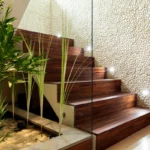
Step lights are worth prioritizing when a deck, retaining wall, or patio has changes in elevation. Recessed deck lights, small riser lights, and under-cap lighting on retaining walls all make stairs easier to read at night. Aim for gentle illumination. The purpose is to reveal the edge of each tread, not shine into someone’s eyes as they climb.
Solar path lights are the simplest DIY option, and they can work well in open, sunny yards. Their trade-off is reliability. Shaded gardens, short winter days, cloudy regions, and aging batteries can leave them dim or inconsistent. If the path is a true safety route, wired low-voltage fixtures are the more dependable choice.
Grills, outdoor kitchens, and work areas
A grill station needs focused task lighting. A nearby weather-rated wall fixture, directional spotlight, or under-counter light can help you see food color, burner controls, and utensils. Warm light is pleasant, but do not choose a fixture so dim that it becomes hard to cook safely.
Avoid placing a bright light directly behind the grill operator. That setup casts your own shadow over the cooking surface. Light mounted above and slightly in front of the work zone is more useful. If the grill is beneath a covered structure, make sure the fixture is approved for damp or wet locations as required by its placement.
Trees, gardens, and architectural features
Landscape lighting brings depth to a backyard after dark. Uplights placed at the base of a mature tree can show off branching structure and create a soft canopy effect. Downlights mounted in a tree can mimic moonlight across a lawn or patio, though installation is usually best handled by a landscape-lighting professional to protect the tree and wiring.
Use accent lights selectively. One handsome specimen tree, a stone wall, or a textured fence may deserve attention. Lighting every shrub and garden bed can look busy, raise the project cost, and make routine maintenance more complicated. A few intentional focal points tend to look more polished.
Security and side-yard coverage
Motion-sensor floodlights have a practical place around gates, sheds, side yards, and rear property lines. They can deter unwanted activity and make it easier to bring out trash or check a noise at night. The key is to choose the lowest brightness that still covers the area and adjust the sensor carefully.
For many homes, 1,500 to 3,000 lumens is enough for a targeted security zone. Higher-output floodlights are available, but they can create harsh glare, disturb neighbors, and reduce your own ability to see beyond the bright area. Shielded fixtures aimed downward are the more considerate choice.
Choose the Right Power Source
Solar, plug-in, low-voltage, and line-voltage lighting each solve a different problem. Solar lights are quick and affordable for decorative areas with strong sun exposure. Plug-in lights work for temporary setups and covered patios with accessible outdoor receptacles. Low-voltage systems are a strong middle ground for paths and landscaping because they are energy-efficient, expandable, and more approachable for capable DIYers.
Line-voltage fixtures are typically used for permanent wall sconces, hardwired floodlights, and major outdoor structures. New exterior circuits, buried wiring, and fixture installation may require permits and should often be handled by a licensed electrician. This is particularly true around pools, hot tubs, and outdoor kitchens, where electrical safety rules are stricter.
All outdoor receptacles should have GFCI protection, and extension cords should be rated for outdoor use when used temporarily. Do not bury extension cords or run them through doors and windows as a long-term solution.
Color Temperature and Brightness Matter More Than Many Buyers Expect
Color temperature affects how a backyard feels. Warm white light around 2200K to 2700K creates a relaxed, firelight-like mood and works beautifully for patios, decks, and landscaping. Light around 3000K is still warm but slightly clearer for cooking and general activity. Cooler light above 4000K can feel stark in a residential backyard, although some homeowners prefer it for utility areas.
Brightness should match the fixture’s job. A decorative path light may need only a modest output, while a back-door fixture needs enough light to identify visitors and handle keys safely. Look beyond wattage, especially with LEDs. Lumens tell you how much light the fixture produces, while wattage mainly indicates energy use.
If you are unsure, choose dimmable fixtures or systems with adjustable output. Being able to reduce brightness is far easier than living with a yard that feels overlit every night.

What a Backyard Lighting Project Costs
A simple solar-light refresh may cost $50 to $200, depending on the number and quality of fixtures. A plug-in string-light setup with poles, guide wire, or mounting hardware often lands around $100 to $400. These are accessible projects for many homeowners, provided the lights and connections are rated for outdoor use.
A professionally installed low-voltage landscape lighting system commonly costs more because it includes a transformer, cable, fixtures, trenching where needed, and labor. Small installations can start in the high hundreds, while a larger, well-designed yard can run several thousand dollars. Hardwired wall lights, new circuits, and security lighting may add electrician costs that vary significantly by location and panel capacity.
It pays to buy fewer durable fixtures instead of filling the yard with inexpensive lights that fail after one or two seasons. Look for corrosion-resistant finishes, replaceable components when available, solid warranties, and an appropriate wet-location rating. Coastal climates, snowy regions, and heavily irrigated landscapes are especially tough on outdoor fixtures.
Avoid These Common Backyard Lighting Mistakes
The most frequent mistake is treating outdoor lighting as decoration only. A beautiful strand of café lights cannot replace light at stairs, gates, or a dark exit route. Build safety into the plan first, then add atmosphere.
Another issue is glare. Exposed bulbs at eye level, unshielded spotlights, and floodlights aimed horizontally can make a backyard less comfortable and less safe. Whenever possible, conceal the source, direct light downward, and view the fixture from the places people will sit and walk.
Finally, leave room for maintenance. Solar panels need occasional cleaning, trees grow around uplights, and mulch can bury small fixtures. Test the yard at night after installation, then reposition lights before calling the project done. The best backyard lighting plan is not the one with the most fixtures. It is the one that makes you want to step outside, stay awhile, and get home safely when the evening ends.