



A floor squeak can make a perfectly comfortable room feel worn out fast. The good news is that learning how to stop a squeaky floor usually starts with a small, fixable movement – not an automatic floor replacement. The key is finding out what is rubbing, flexing, or separating before you drive in a screw or spread adhesive. Understanding how to stop a squeaky floor is essential for maintaining your home’s integrity.
Table Of Content
- Find the Exact Source of the Squeak
- How to Stop a Squeaky Floor From Below
- Close Small Gaps Between the Subfloor and Joists
- Reinforce a Loose Subfloor Panel
- Add Blocking Where the Floor Feels Springy
- Repairing Squeaks From Above
- Carpeted Floors
- Hardwood and Engineered Wood Floors
- Laminate, Vinyl, and Tile
- Don’t Ignore Moisture, Movement, or Structural Clues
- A Few Repairs That Often Disappoint
Most squeaks happen where the finish floor, subfloor, and framing no longer move as one solid surface. Seasonal humidity changes, loose fasteners, undersized subfloor panels, and normal settling can all create that tiny bit of motion. Your repair should match the source, especially if you want to protect finished hardwood, tile, or carpet.
Find the Exact Source of the Squeak
Start by walking slowly across the problem area in clean, flat shoes. Have another person listen from below if the ceiling is open or unfinished. Mark the loudest point with painter’s tape, then step around it from several directions. A squeak that occurs only when stepping one way may point to a loose board edge; a squeak across a wider area can mean the subfloor is moving on the joists.
When considering how to stop a squeaky floor, it’s crucial to identify the specific areas that require attention to prevent further issues in the future.
If you have basement or crawlspace access, look up while someone steps on the marked spot. Watch for gaps between the subfloor and joist, loose nails, cracked blocking, or plumbing and ductwork rubbing against wood. A flashlight helps, and a helper is more useful than trying to identify movement by sound alone.
Before making a repair, identify your floor covering. Carpet, hardwood, laminate, vinyl, and tile all require different approaches. Driving a screw through a hardwood floor is not the same low-risk move as driving one through carpet. If tile is installed over the squeaky area, avoid surface repairs until you understand the cause. Tile can crack if the subfloor beneath it is flexing.
Once you know how to stop a squeaky floor, you can confidently tackle repairs without the fear of damaging your home.
How to Stop a Squeaky Floor From Below
Access from below is often the cleanest option because it leaves your finished floor untouched. It is especially worthwhile for hardwood, luxury vinyl, or tile floors where a visible repair would be difficult to hide.
Close Small Gaps Between the Subfloor and Joists
If you see a thin gap between the subfloor and a floor joist, apply construction adhesive along the joint. Use an adhesive rated for wood subfloors, and do not overfill the gap. A thick bead can cure into a hard bump that creates another point of stress.
This technique is one of the most effective ways on how to stop a squeaky floor, as it targets the root cause of the noise.
For a gap that is too wide for adhesive alone, tap in a thin wood shim coated lightly with construction adhesive. The shim should fit snugly but should not force the subfloor upward. Trim any excess after the adhesive cures. This simple repair works because it removes the movement that creates the squeak.
Reinforce a Loose Subfloor Panel
Knowing how to stop a squeaky floor can save you both time and money while ensuring your home remains comfortable.
A subfloor that has pulled away from a joist may need mechanical support. Predrill a pilot hole upward through the joist and into the subfloor, then install a short wood screw that will not penetrate the finished flooring above. Measure carefully. In many homes, a 1 1/4-inch to 1 1/2-inch screw is appropriate, but the right length depends on your subfloor thickness and floor covering.
Use screws rather than nails. Nails can work loose as the house moves, while screws hold the subfloor tightly to the framing. Keep screws a few inches away from the edge of the joist and avoid areas where electrical wiring, plumbing, or radiant heating may be present.
Add Blocking Where the Floor Feels Springy
If the squeak is at a subfloor seam between joists, the panels may be rubbing together because they lack support. Adding wood blocking between joists beneath the seam can stiffen the area. Cut the blocking to fit tightly, apply construction adhesive at the contact points, and fasten it through the joists.
For those unsure of how to stop a squeaky floor, consulting with a professional can provide the necessary guidance.
This is a more involved repair, but it can solve a recurring squeak and reduce noticeable bounce. It is a good DIY project for a homeowner comfortable working overhead in a basement or crawlspace. If the framing looks damaged, excessively notched, or uneven, stop and bring in a carpenter or structural professional.
Repairing Squeaks From Above
These methods are key in understanding how to stop a squeaky floor and prevent future problems.
When there is no access below, a top-side repair may be your practical option. The trade-off is clear: you can often fix the noise quickly, but you need to protect the visible floor surface.
Carpeted Floors
Carpet is the most forgiving floor covering for a top-side repair. First, locate the joist with a stud finder designed to detect framing through flooring, or use nearby fastener lines as clues. Then use a breakaway screw system made specifically for carpeted floors. These kits allow you to drive a screw through the carpet and subfloor into the joist, then snap off the head below the carpet pile.
Avoid ordinary drywall screws for this job. Their heads can remain noticeable underfoot, and their brittle shafts are not designed for repeated floor movement. A purpose-made floor repair screw costs more than a box of basic screws, but it reduces the risk of damaging the carpet or leaving a sharp point behind.
Hardwood and Engineered Wood Floors
With exposed wood flooring, repair from below whenever possible. If you must work from above, use a finish screw or trim-head screw placed where it can be concealed, such as near a board edge or beneath a planned furniture location. Predrill first to reduce the chance of splitting the board.
Countersink the fastener slightly, fill the hole with a matching wood filler or color-matched wax stick, and let it cure before walking on it. This can be a very effective repair, but it is not invisible in every lighting condition. For a high-end hardwood floor, a flooring contractor may be worth the service call.
Laminate, Vinyl, and Tile
If you are experiencing issues, knowing how to stop a squeaky floor will help you take the right steps.
Do not drill through floating laminate or click-lock vinyl flooring. These floors need room to expand and contract, and fastening through them can create buckling or break the locking edges. Remove the affected planks if practical, repair the subfloor, and reinstall the flooring according to the manufacturer’s expansion-gap requirements.
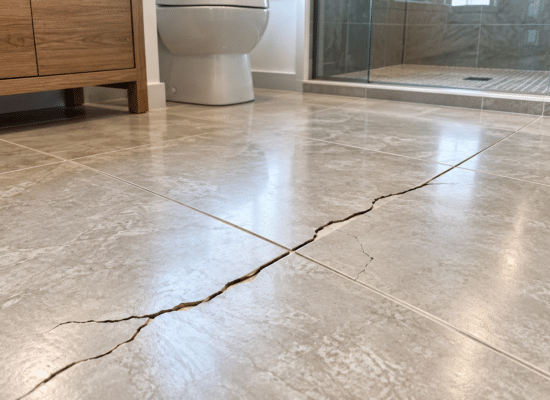
For tile, a squeak paired with loose grout, cracked tile, or a hollow sound is a warning that the floor assembly may be moving. Adding a screw from above can crack the tile or damage waterproofing. A tile professional can assess whether a localized repair is possible or whether the underlayment has failed.

Don’t Ignore Moisture, Movement, or Structural Clues
A squeak that appears after a leak, flood, or long period of high humidity needs a closer look. Water can swell subflooring, weaken fastener grip, and lead to mold or rot. In a crawlspace, check for standing water, missing vapor barriers, leaking pipes, and poor ventilation before treating the squeak as a simple fastening problem.
By learning how to stop a squeaky floor, you can maintain the aesthetic and functionality of your home.
Call a professional if the floor feels soft, slopes noticeably, has widespread movement, or squeaks alongside cracked walls and sticking doors. Those symptoms can point to a larger framing or foundation issue. The cost of an inspection is usually far less than covering up a problem that continues to spread.
A Few Repairs That Often Disappoint
Sprinkling talcum powder or powdered graphite into a floor seam can quiet wood-on-wood rubbing temporarily, but it does not secure a loose subfloor. It may also leave residue in seams and is rarely the best first choice for a finished floor.
Likewise, adding screws at random can create more work than it saves. A screw that misses the joist may not stop the movement, while one that is too long can damage flooring, create a bump, or emerge through the surface. Take the extra time to locate framing, measure thicknesses, and make one targeted repair at a time.
Ultimately, knowing how to stop a squeaky floor is an invaluable skill for every homeowner.
A quiet floor is usually the result of a small, precise fix rather than a major renovation. Start with the loudest spot, confirm what is moving, and choose the least invasive repair that actually addresses it. That approach protects your budget, your finished floors, and the comfort of the rooms you use every day.
Applying these techniques on how to stop a squeaky floor will ensure you achieve lasting results.