


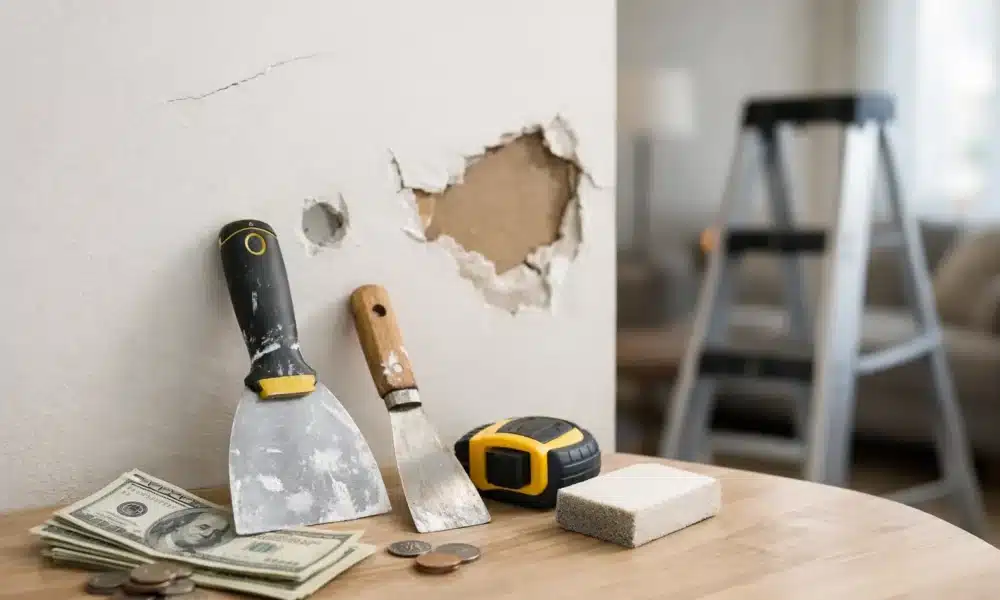
A doorknob-sized hole can be a $20 weekend fix. A soft, stained ceiling after a plumbing leak can become a much bigger drywall repair cost once the source of the water is addressed. That is why drywall repair cost is best estimated by the type of damage, not just the square footage you can see.
Table Of Content
- Drywall Repair Cost at a Glance
- What Changes the Price of Drywall Repair?
- The size and depth of the damage
- Whether the wall has a texture or specialty finish
- Paint and color matching
- Water, mold, and the cause of the damage
- Location and access
- DIY vs. Professional Drywall Repair Cost
- Common Repairs and What They Usually Involve
- Nail pops and small cracks
- Holes from doors, furniture, or accidents
- Water stains and damaged ceilings
- How to Keep Repair Costs Under Control
For most homeowners, professional drywall repairs land between $150 and $800, while small DIY patches may cost $15 to $75 in materials. Larger repairs involving water damage, ceilings, texture matching, or multiple rooms can run well above $1,000. The good news is that many wall repairs are manageable once you understand what the quote includes.
Understanding drywall repair cost is crucial for homeowners looking to maintain their properties effectively.
Drywall Repair Cost at a Glance
A contractor commonly has a minimum service charge, often $150 to $300, even for a small dent or hole. That minimum covers travel, setup, materials, and the return trip that may be needed after joint compound dries. As a result, drywall repair cost for one tiny hole is not always much cheaper than repairing several in the same visit.
Here are realistic 2026 planning ranges for common repairs:
-
- Small nail holes, dents, or dings: $15 to $75 DIY; $150 to $300 professionally
- Small hole, up to about 6 inches: $20 to $100 DIY; $150 to $350 professionally
- Medium hole, roughly 6 to 12 inches: $35 to $150 DIY; $200 to $450 professionally
- Large hole or cutout: $75 to $250 DIY; $300 to $800 professionally
- Cracked drywall seam: $25 to $100 DIY; $200 to $600 professionally
- Water-damaged drywall replacement: $200 to $800 for a localized repair; $800 to $2,500 or more for extensive damage
When considering drywall repair cost, remember to factor in potential additional expenses for hazardous materials or special finishes.
- Ceiling drywall repair: $250 to $1,000 or more, depending on access, damage, and texture
These are planning numbers, not fixed prices. Labor rates in high-cost metro areas, difficult access, and specialized finishes can all push the final bill higher.
What Changes the Price of Drywall Repair?
Homeowners should always ask about drywall repair cost before commencing any repair work to avoid unexpected expenses.
The size and depth of the damage
A shallow dent may only need spackle, sanding, primer, and paint. A hole that breaks through the drywall needs a stable backing or a patch panel, followed by several thin coats of joint compound. If framing is damaged behind the wall, the repair becomes carpentry work as well.
Large damaged areas are not always repaired by filling and patching. A pro may cut the drywall back to the nearest studs and install a clean rectangular piece. That can look counterintuitive, but it often creates a flatter, longer-lasting repair than trying to save a ragged section of board.
Whether the wall has a texture or specialty finish
Texture matching can greatly influence drywall repair cost, so be sure to discuss this with your contractor.
Smooth drywall is the simplest finish to patch. Orange peel, knockdown, popcorn, and hand-troweled textures require a closer color and pattern match. A patch may be structurally sound yet still stand out if the texture is wrong, especially on a ceiling where light reveals every uneven edge.
Texture matching can add $50 to $300 to a repair, depending on the area and finish. Popcorn ceiling repairs may also require testing for asbestos in homes built before the mid-1980s, particularly when the original material has never been disturbed. Do not sand or scrape a suspect texture until you know what it contains.
The final drywall repair cost may also include the expense of matching existing textures in the room.
Paint and color matching
The patch itself may be inexpensive, but repainting is where a quote can grow. Touching up with leftover paint is the most affordable option, assuming the color has not faded over time. If the old paint no longer matches, contractors may recommend painting the entire wall from corner to corner so the repair disappears.
Expect painting to add roughly $100 to $500 for a small wall, more for tall rooms, stairwells, ceilings, or walls with trim that needs careful masking. Ask whether primer and paint are included in the estimate. They are not always part of the drywall price.
When budgeting, always include potential drywall repair cost related to painting and color matching.
Water, mold, and the cause of the damage
Drywall damaged by water should not be treated as a cosmetic issue first. The leak, roof problem, plumbing failure, or condensation source needs to be fixed before new drywall goes up. Otherwise, the new drywall repair cost can fail just as quickly as the old one.
If drywall feels soft, has a musty odor, or shows visible mold, removal and drying may be necessary. Minor surface staining is one thing; recurring moisture behind a wall is another. Professional remediation and plumbing or roof repairs are separate costs, which is why a seemingly small stain can turn into a larger project.
Location and access
A repair in an open bedroom wall is usually straightforward. Damage above a staircase, behind built-in cabinetry, around electrical boxes, or on a high ceiling takes more time and equipment. Ceiling work also carries more risk because the installer must support the patch overhead while keeping joints flat.
Location and access can have a significant impact on drywall repair cost, especially in challenging spaces.
When comparing estimates, look beyond the total. A lower quote may exclude furniture protection, debris removal, texture work, primer, or paint. A clear scope of work makes prices easier to compare fairly.

DIY vs. Professional Drywall Repair Cost
Understanding the differences in drywall repair cost between DIY and professional services is essential for informed decisions.
DIY makes the most sense for small dents, nail holes, minor cracks, and holes that are no larger than a few inches across. A basic repair kit, putty knife, sandpaper, spackle or joint compound, primer, and touch-up paint are usually enough. For a small hole, a self-adhesive mesh patch or drywall patch kit can simplify the job.
For small jobs, a DIY approach can greatly reduce drywall repair cost, but larger issues typically necessitate professional help.
The trade-off is time. Joint compound needs drying time between coats, and the final result depends on patient sanding and feathering. Rushing the process can leave a visible bump or a patch that flashes through paint under certain lighting.
Hiring a pro is usually worthwhile for ceiling damage, recurring cracks, holes larger than a dinner plate, water damage, textured surfaces, or repairs in highly visible areas such as an entryway or living room. It is also a smart move when you suspect the problem involves settling, a leak, or loose drywall rather than a one-time impact.
Consider discussing the potential drywall repair cost with contractors before hiring for larger projects.
A useful middle ground is to handle the simple patch yourself and hire a painter for the final wall repaint. That approach can control costs while avoiding the most noticeable part of the job: the paint blend.
Common Repairs and What They Usually Involve
Nail pops and small cracks
Nail pops happen when fasteners shift slightly behind the drywall, leaving a small round bump or crack. The durable fix is not simply covering the spot. A contractor typically adds drywall screws into the stud near the pop, removes or sets the loose fastener, then applies compound and paint.
One or two nail pops are common in newer homes or after seasonal movement. A growing pattern of cracks, doors that stick, or gaps around trim may point to broader movement worth discussing with a qualified professional.
Holes from doors, furniture, or accidents
Small punctures are often patched with mesh and compound. For larger holes, a backing board or drywall insert provides support. The final finish requires feathering compound well beyond the hole, so the repaired area may be much wider than the original damage.
If a door repeatedly hits the same wall, include a doorstop in the fix. Spending a few dollars to prevent another impact is better than paying for the same patch twice.
Water stains and damaged ceilings
A water stain does not always mean the drywall must be replaced. Once the moisture source is fixed and the area is dry, a stain-blocking primer and paint may be enough. Swollen, sagging, crumbly, or moldy drywall should be removed and replaced instead.
For ceilings, do not ignore sagging material. Wet drywall is heavy, and a weakened ceiling section can fall. Keep people out from beneath it and arrange a prompt inspection, especially after a major leak.
How to Keep Repair Costs Under Control
By preparing properly, homeowners can keep drywall repair cost under control and avoid surprise expenses.
Start by taking clear photos and measuring the damaged area. Note whether the drywall is on a wall or ceiling, whether there is texture, and whether you have matching paint. This information helps contractors give a more useful initial range and helps you avoid vague quotes.
If you have several small repairs, bundle them into one appointment. Because service minimums are common, repairing three nail pops and a hole at once can offer much better value than scheduling separate visits. You can also save money by moving furniture, protecting nearby décor, and keeping the work area accessible, but confirm that the contractor is comfortable with that arrangement.
Do not choose solely on the lowest bid. Ask whether the price includes replacing damaged drywall, taping, multiple coats of compound, sanding, texture matching, primer, paint, cleanup, and a return visit if needed. A complete repair should look flat in daylight, not merely covered up.
A good drywall repair restores more than a wall surface. It removes the small visual reminder of a leak, accident, or aging-house quirk and lets the room feel finished again. Plan for the full repair, including paint and the cause of the damage, and your next house project is far more likely to stay on budget.
Ultimately, understanding drywall repair cost is key to maintaining a home effectively and budget-friendly.