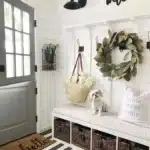
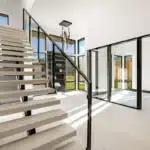


The best entryway bench ideas solve an everyday problem before they solve a decorating problem. You need somewhere to sit while tying shoes, somewhere to keep the footwear that otherwise collects beside the door, and perhaps somewhere to drop a bag without turning the foyer into a storage room. Incorporating innovative entryway bench ideas can enhance both functionality and aesthetics.
Table Of Content
- Start With Function Before Choosing an Entryway Bench
- 1. Choose a Simple Open Bench for a Clean Entryway
- 2. Use an Entryway Bench With Shoe Storage
- 3. Consider a Built-In Bench for a Permanent Entryway
- 4. Try a Floating Bench in a Small Entryway
- 5. Turn a Narrow Bench Into a Shoe Station
- 6. Combine a Bench With a Hall Tree
- 7. Add Drawers When You Want Clutter Completely Hidden
- 8. Use Baskets for Flexible Storage
- 9. Add an Upholstered Bench for a Softer Entryway
- 10. Use a Wood Bench for Durability and Visual Warmth
- 11. Create a Modern Entryway Bench Arrangement
- 12. Pair an Entryway Bench With a Large Mirror
- 13. Build Around Hooks for a Family-Friendly Drop Zone
- 14. Use the Space Under the Stairs
- 15. Coordinate the Bench With Entryway Paint
- 16. Use a Farmhouse Bench Without Making the Space Look Themed
- 17. Make the Bench Part of an Entryway System
- How Big Should an Entryway Bench Be?
- Leave the door area alone
- Entryway Bench Ideas for Small Spaces
- Floating bench
- Bench with one shoe shelf
- Corner bench
- Bench plus hooks
- Bench with baskets
- Entryway Bench Ideas With Storage: Open or Closed?
- Open storage
- Closed storage
- What Should You Put Above an Entryway Bench?
- How to Style an Entryway Bench Without Creating Clutter
- What is the best type of bench for an entryway?
- How deep should an entryway bench be?
- Should an entryway bench have storage?
- What do you put under an entryway bench?
- What should go above an entryway bench?
- Can you put a bench in a narrow entryway?
- Is an upholstered bench practical near the front door?
- How do you make an entryway bench look expensive?
A good bench can handle all three jobs while making the entrance feel intentional.
Consider different styles of entryway bench ideas that can fit your space and needs.
But dimensions, traffic flow, storage style, upholstery, and location matter more than Pinterest-worthy styling. This My NEXT HOUSE PROJECT guide covers practical bench designs for small entryways, busy family homes, narrow foyers, modern interiors, farmhouse spaces, and mudroom-style entrances so you can choose an idea that works after the photograph is taken.
Explore how various entryway bench ideas can transform your entryway into an organized space.
Start With Function Before Choosing an Entryway Bench
When selecting your bench, look for entryway bench ideas that combine style with utility.
The first question isn’t, “What style of bench looks best?”
Ask:
What problem does the bench need to solve?
For one household, the answer may simply be seating.
For another, the front door is where shoes, backpacks, dog leashes, umbrellas, coats, reusable grocery bags, and children’s sports equipment accumulate.
Those two entryways should not use the same bench.
Before shopping or building anything, identify what currently ends up near your front door. Then decide whether you primarily need:
-
seating
-
shoe storage
-
hidden storage
-
coat organization
-
a decorative focal point
-
a combination of several functions
My NEXT HOUSE PROJECT’s broader guide to what belongs in an entryway explains how seating, rugs, mirrors, hooks, storage, lighting, and other elements work together rather than functioning as unrelated pieces.
That matters because even the most attractive bench becomes frustrating if it makes the doorway harder to use.
1. Choose a Simple Open Bench for a Clean Entryway
Many homeowners find that simple entryway bench ideas can make a big difference in functionality.
Sometimes the simplest entryway bench ideas are the best.
A backless wood bench provides a place to sit without visually dominating the room. Because the area beneath it remains open, the bench tends to feel lighter than a cabinet-style piece.
This works particularly well in:
-
modern homes
-
minimalist interiors
-
narrow foyers
-
entrances where storage already exists elsewhere
Place one or two baskets underneath if occasional storage is needed.
The advantage is flexibility. If your entryway changes later, a simple bench can move to a hallway, bedroom, dining room, or covered porch more easily than a large built-in unit.
2. Use an Entryway Bench With Shoe Storage
Shoes are one of the main reasons an entryway starts looking cluttered.
A storage bench provides a direct solution.
Look for:
-
open shoe shelves
-
divided cubbies
-
pull-out baskets
-
drawers
-
ventilated compartments
Open shelving is convenient for shoes worn daily because people are more likely to actually use it.
Closed storage creates a cleaner appearance, but make sure damp footwear has a chance to dry before sealing it inside a confined compartment.
For families, divide storage by person rather than by shoe type. Giving everyone a designated cubby or basket often works better than trying to maintain a perfectly organized common shoe collection.
3. Consider a Built-In Bench for a Permanent Entryway
Built-ins make sense when you own the home and know exactly how the space needs to function.
A well-planned built-in can combine:
-
seating
-
shoe cubbies
-
drawers
-
overhead cabinets
-
coat hooks
-
charging outlets
-
baskets
-
a shelf for hats or seasonal items
Built-ins are particularly effective in recessed alcoves or along unused walls.
Using practical entryway bench ideas can significantly improve the flow of your entry space.
The biggest advantage is dimensional control. Instead of searching for furniture that almost fits, cabinetry can be designed around the available wall.
House Beautiful’s collection of designer entryways shows how built-in seating, hooks, shelving, and storage can turn a relatively small entrance into a multifunctional zone.
But don’t build cabinetry simply because the wall is available. Preserve enough open floor area to enter, close the door, carry groceries, and move comfortably through the space.
4. Try a Floating Bench in a Small Entryway
A floating bench eliminates legs and exposes more flooring.
That small change can make a compact entrance feel less crowded.
These small entryway bench ideas work particularly well when you want seating but cannot afford the visual weight of a conventional furniture piece.
A floating bench can also leave room underneath for:
-
shoes
-
baskets
-
a boot tray
-
robot-vacuum access
The wall structure and mounting method matter. A floating bench intended for adults must be securely anchored to framing or an appropriately engineered support system rather than merely attached to drywall.
For additional compact-layout strategies, see My NEXT HOUSE PROJECT’s guide to entryway ideas for small spaces.
5. Turn a Narrow Bench Into a Shoe Station
Depth matters more than width in a tight entry.
A long bench may fit beautifully along a wall while still causing problems if it projects too far into the walking path.
Before ordering furniture, use painter’s tape to mark its footprint on the floor.
Then test ordinary routines.
Open the front door.
Walk past the taped area while carrying groceries.
Pretend someone is sitting on the bench while another person passes.
Open any nearby closet doors.
This simple exercise is more useful than relying on a product photo.
For narrow foyers, prioritize slim benches with shallow shoe shelving underneath rather than deep lift-top storage.
6. Combine a Bench With a Hall Tree
Discover how combined entryway bench ideas can maximize your space’s potential.
A hall tree combines vertical storage with seating.
It may include:
-
a bench
-
coat hooks
-
an upper shelf
-
shoe compartments
-
side cabinets
-
a back panel
This is one of the most practical entryway bench ideas with storage for homes without a separate coat closet.
The tradeoff is visual mass.
A full hall tree can overwhelm a small entrance, particularly if it is dark, deep, or wider than the available wall.
Measure carefully and consider wall color. A light-colored or wall-matching unit can sometimes feel less imposing than a sharply contrasting cabinet.
For homeowners who like a warmer rustic aesthetic, My NEXT HOUSE PROJECT’s farmhouse entryway bench buying guide explores farmhouse benches and hall-tree configurations in greater detail.
7. Add Drawers When You Want Clutter Completely Hidden
For those seeking a clutter-free entrance, entryway bench ideas with hidden storage are essential.
Open cubbies are convenient.
They’re also open.
That means everyone can see whatever has been shoved into them.
If you prefer a cleaner entrance, consider a bench with drawers.
Drawers work particularly well for:
-
gloves
-
scarves
-
dog accessories
-
small umbrellas
-
reusable bags
-
shoe-care products
-
children’s accessories
Labeling the interior isn’t necessary, but assigning each drawer a purpose helps prevent it from becoming a miscellaneous junk drawer beside the front door.
8. Use Baskets for Flexible Storage
Adding a few decorative touches to your entryway bench ideas can enhance the overall aesthetic.
Baskets are useful because they soften the appearance of open furniture and can be removed easily.
Try matching baskets for a more tailored appearance or mixed natural materials for a relaxed look.
Before buying them, measure the openings.
A basket that technically fits may still be frustrating if there isn’t enough clearance to slide it out comfortably.
For busy households, durability matters more than perfect styling. Choose handles that can withstand repeated pulling and materials that will tolerate shoes, sports gear, and everyday use.
9. Add an Upholstered Bench for a Softer Entryway
Consider how different fabrics in your entryway bench ideas can impact the look and feel of your space.
Not every bench needs to look utilitarian.
An upholstered design can make a formal foyer feel more like part of the home’s living space.
This works especially well when the entrance does not need heavy-duty shoe storage.
Good fabric choices depend on household use.
If the bench will be used daily by children, guests, or anyone coming inside with wet clothing, delicate fabrics may become frustrating quickly.
Look for upholstery that is:
-
durable
-
easy to clean
-
tightly woven
-
appropriate for frequent use
A removable cushion cover makes maintenance considerably easier.
10. Use a Wood Bench for Durability and Visual Warmth
Wood remains one of the easiest materials to integrate into an entryway.
Oak, maple, walnut, pine, acacia, and other species offer different appearances and price points, but finish quality and construction matter just as much as species.
Natural wood pairs particularly well with:
-
painted walls
-
black hardware
-
woven baskets
-
stone or tile floors
-
neutral rugs
-
metal hooks
Wood also introduces visual warmth into entrances dominated by hard flooring and painted surfaces.
My NEXT HOUSE PROJECT’s entryway decorating guide discusses how natural materials, seating, rugs, hooks, and accessories can create a more cohesive first impression. See the entryway decorating ideas guide.
11. Create a Modern Entryway Bench Arrangement
Effective entryway bench ideas often require thoughtful planning and design.
Good modern entryway bench ideas usually rely on fewer pieces rather than more decoration.
Start with:
-
a clean-lined bench
-
one large mirror or artwork
-
a simple rug
-
discreet storage
-
intentional lighting
Avoid covering the entire bench with pillows and accessories.
A bench needs to remain usable.
One cushion, a folded throw, or a single decorative pillow is often enough to soften the piece without turning the seat into display space.
Modern doesn’t have to mean cold. Natural wood, linen, textured plaster, warm white walls, wool rugs, and aged metal can create a restrained entryway that still feels comfortable.
12. Pair an Entryway Bench With a Large Mirror
Pairing your bench with thoughtful decor amplifies the impact of your entryway bench ideas.
A mirror and bench make a natural pairing.
The bench occupies the lower portion of the wall while a mirror gives the upper area purpose.
The mirror is also practical for a final check before leaving the house.
Scale matters.
A tiny mirror floating above a substantial bench can look disconnected. Conversely, an oversized mirror with a very narrow bench may overwhelm the composition.
My NEXT HOUSE PROJECT’s guide to choosing the right shape for an entryway or hallway mirror explains how rectangular, round, oval, and unconventional mirrors change the visual character of an entrance.
13. Build Around Hooks for a Family-Friendly Drop Zone
For families, a beautiful bench without hooks may solve only half the problem.
Backpacks and coats still need somewhere to go.
Install hooks above or beside the bench, but think about who uses them.
A single row placed high on the wall may work for adults but not for children. Two heights can make the system more usable for everyone.
Don’t crowd hooks so closely that coats overlap excessively.
And consider what is hanging there visually. Five winter coats, three backpacks, a bicycle helmet, and two tote bags can make even an attractive wall look chaotic.
Keep everyday items accessible and move seasonal overflow elsewhere.
14. Use the Space Under the Stairs
Utilizing the under-stair area is just one of many effective entryway bench ideas.
An under-stair area can be an excellent place for an entryway bench, particularly when the staircase begins near the entrance.
Instead of filling the nook with random furniture, consider a fitted bench with storage.
Depending on available depth, the area can accommodate:
-
drawers
-
shoe storage
-
a cushioned seat
-
hooks
-
lighting
-
built-in cabinetry
These entryway bench ideas work especially well because they turn architecture that might otherwise be awkward into useful square footage.
If headroom is limited, locate the actual seating where ceiling height feels comfortable and use the lower portion for storage.
15. Coordinate the Bench With Entryway Paint
Furniture and wall color should be selected together.
A black bench against very dark paint can disappear visually. That may be desirable in a moody space, but it can also make a small entrance feel heavy.
A natural oak bench against warm white or muted green walls produces a completely different effect.
Useful combinations include:
-
natural oak + warm white
-
walnut + soft greige
-
black bench + light neutral walls
-
painted bench + matching wall color
-
medium wood + muted green
-
white oak + clay or mushroom tones
For additional color inspiration, My NEXT HOUSE PROJECT’s entryway paint ideas explores color, pattern, finishes, and reflective surfaces in greater depth.
16. Use a Farmhouse Bench Without Making the Space Look Themed
For a cohesive look, select entryway bench ideas that harmonize with your overall decor.
Farmhouse styling doesn’t require covering the entrance in distressed signs, faux antiques, and shiplap.
A more restrained approach often ages better.
Try:
-
one substantial wood bench
-
black or aged-brass hooks
-
natural baskets
-
a woven rug
-
simple wall molding
-
one large mirror
This is where farmhouse entryway bench ideas have evolved. The emphasis can be on honest materials and practical storage rather than overtly themed decoration.
If your existing home is contemporary, combine a rustic wood bench with cleaner surrounding elements instead of attempting to transform the entire foyer into a farmhouse interior.
17. Make the Bench Part of an Entryway System
Ultimately, the best entryway bench ideas integrate seamlessly into your home’s design.
The strongest entryway bench ideas don’t treat the bench as an isolated piece of furniture.
Think of the entrance as a small system.
A useful sequence might look like this:
Door → mat → bench → shoe storage → hooks → mirror → key/mail location
That sequence follows how people actually enter and leave a house.
When each object has a purpose, the entryway requires less daily cleanup.
When there is no plan, horizontal surfaces become temporary storage. The bench fills with packages, the console fills with mail, and shoes migrate onto the floor.
Design around behavior rather than expecting behavior to adapt to the furniture.
How Big Should an Entryway Bench Be?
There is no universal bench dimension that works for every entrance.
The right size depends on:
-
wall length
-
doorway swing
-
traffic path
Determining the right size for your bench is crucial in implementing the best entryway bench ideas.
-
closet doors
-
number of users
-
storage requirements
-
surrounding furniture
A comfortable furniture-scale seat is often roughly chair height, but product dimensions vary. Rather than relying on one prescribed number, compare the proposed height with chairs or benches you already find comfortable.
Depth deserves even more attention.
A deep bench may be comfortable but can obstruct a narrow entrance.
Before buying, tape the bench dimensions onto the floor and test the pathway.
Leave the door area alone
Never place a bench where it interferes with:
-
the front-door swing
-
storm or screen doors
-
closet doors
-
stairs
-
HVAC registers
-
electrical panels
-
required circulation
A beautiful foyer is still a circulation space.

Entryway Bench Ideas for Small Spaces
Small space solutions among entryway bench ideas can maximize both style and storage.
A small entrance does not necessarily require smaller versions of everything.
It requires fewer objects doing more jobs.
Consider:
Floating bench
Keeps the floor visible and reduces visual bulk.
Bench with one shoe shelf
Provides seating and storage without becoming cabinetry.
Corner bench
Uses an awkward area that might otherwise remain empty.
Bench plus hooks
Moves coat storage vertically instead of adding another floor-standing unit.
Bench with baskets
Provides flexible storage that can change with the household.
One mistake is squeezing a bench, console table, coat rack, plant stand, and shoe cabinet into an entry simply because each piece fits individually.
They may fit.
The room may not.
Entryway Bench Ideas With Storage: Open or Closed?
Choosing between open and closed storage in your entryway bench ideas can affect functionality.
Neither option is universally better.
Open storage
Best when you want:
-
immediate access
-
visible shoe storage
-
easy cleaning
-
lighter-looking furniture
Closed storage
Best when you want:
-
less visual clutter
-
storage for small miscellaneous items
-
a more furniture-like appearance
-
separation between everyday mess and the room
A hybrid bench is often the most practical option: open shoe space below with one or two drawers for smaller items.
What Should You Put Above an Entryway Bench?
Overall, the right decor above your bench can complement your entryway bench ideas.
Good options include:
-
mirror
-
artwork
-
hooks
-
framed photographs
-
shallow shelf
-
wall molding
-
picture light
Avoid treating every square inch as usable storage.
Blank space is part of the composition.
One large mirror with a pair of hooks may make a stronger impression than ten small decorative objects competing for attention.
How to Style an Entryway Bench Without Creating Clutter
Effective styling of entryway bench ideas ensures a clutter-free and welcoming environment.
Start with the functional items.
Perhaps the bench needs:
-
one seat cushion
-
one basket underneath
-
hooks above
-
a nearby boot tray
Then decorate what’s left.
A simple arrangement might include:
one pillow + one folded throw + one piece of artwork
That’s enough.
House Beautiful’s designer entryway examples similarly show that benches work best when they remain integrated into the room rather than becoming overloaded decorative displays.
Your bench should still have room for someone to sit.
Key Takeaways
Summarizing the key points from your entryway bench ideas ensures clarity and usefulness.
-
The strongest entryway bench ideas solve seating, shoe storage, or organization problems first.
-
Measure bench depth as carefully as width, especially in narrow entrances.
-
Use painter’s tape on the floor to test the furniture footprint before buying.
-
Open storage offers faster access; closed storage creates a cleaner appearance.
-
Floating benches can visually open compact entryways.
-
Built-ins are useful when a permanent custom solution is justified.
-
A hall tree can combine seating, hooks, and storage but may overwhelm a very small foyer.
-
Coordinate the bench with mirrors, hooks, rugs, lighting, and wall color rather than selecting each independently.
-
Keep the bench usable. Too many cushions and decorative objects defeat its primary purpose.
-
Think of the entryway as a daily-use system rather than a decorative vignette.
FAQ Section – People Also Ask
Many people also ask about the best entryway bench ideas for their specific needs.
What is the best type of bench for an entryway?
For most households, a sturdy bench with shoe storage underneath provides the most useful combination of seating and organization. Small entrances may benefit from a shallow or floating bench, while larger foyers can accommodate upholstered benches or built-in cabinetry.
How deep should an entryway bench be?
There is no single ideal depth because entryways vary considerably. The important measurement is how much clear circulation remains once the bench is installed. Mark the proposed depth with painter’s tape and test the space before purchasing furniture.
Should an entryway bench have storage?
It depends on what accumulates near the door. If shoes, bags, gloves, or children’s items routinely end up in the entryway, integrated storage is useful. If you already have a nearby coat closet, a simple open bench may look better and provide all the function you need.
What do you put under an entryway bench?
Common choices include shoes, baskets, a boot tray, pet accessories, and seasonal items. Open shelving works best for frequently used shoes, while baskets hide smaller belongings.
What should go above an entryway bench?
A mirror, artwork, coat hooks, or a shallow shelf can complete the wall. Choose one dominant element instead of filling every available area. A large mirror is particularly useful in smaller entrances because it can reflect light and provide a convenient place for a final check before leaving.
Can you put a bench in a narrow entryway?
Yes, provided it does not interfere with circulation or door swings. Look for shallow, backless, wall-mounted, or floating designs. Testing the dimensions on the floor with tape before buying is particularly helpful in narrow spaces.
Is an upholstered bench practical near the front door?
It can be, especially in a formal foyer or low-mess household. In a high-traffic entrance, choose durable, easy-to-clean upholstery or a removable washable cushion. Homes that routinely deal with wet boots, pets, or young children may find a wood bench easier to maintain.
How do you make an entryway bench look expensive?
Prioritize proportion, material, and restraint rather than adding more decoration. A well-scaled solid-looking bench, quality hardware, coordinated baskets, one substantial mirror, and intentional lighting usually create a more polished effect than numerous small accessories.