

A tile sample can look perfect under showroom lights and still be the wrong choice for your mudroom, shower, or kitchen floor. The porcelain vs ceramic tile decision is less about which material is universally better and more about how much water, foot traffic, and installation difficulty your room will see. Understanding porcelain vs ceramic tile can help you make a better choice.
Table Of Content
Both can create a durable, good-looking surface that is easy to clean. But their differences affect your material budget, the tools needed for a DIY installation, and how well the floor or wall holds up over time. Here is how to choose with fewer surprises after the boxes arrive.
The differences between porcelain vs ceramic tile can significantly impact your decision.
Porcelain vs Ceramic Tile: The Core Difference
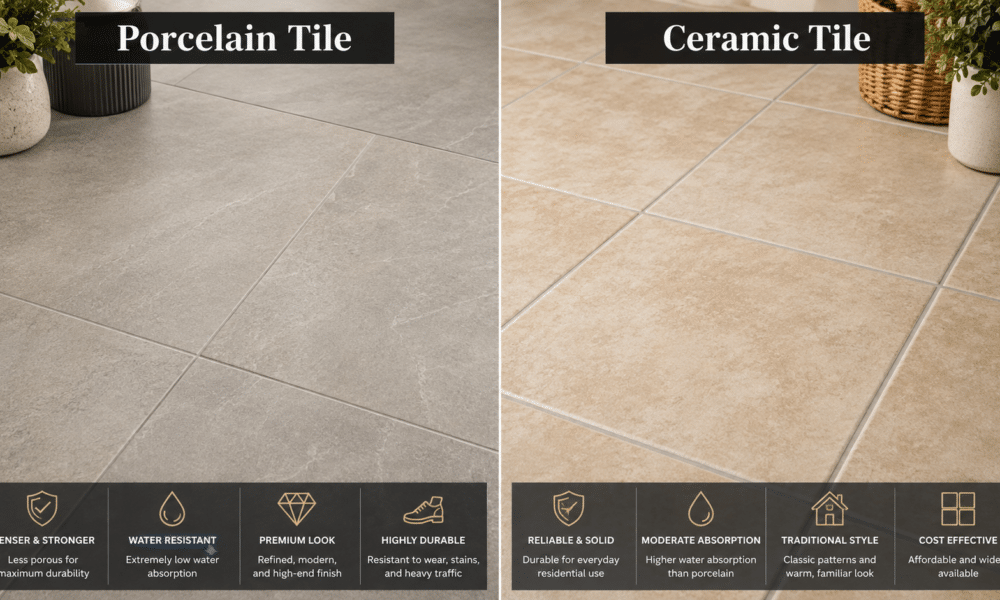
Porcelain and ceramic tiles are both made from clay and fired in a kiln. The practical distinction is density and water absorption. Porcelain is made from finer clay, fired at higher temperatures, and manufactured to absorb 0.5% or less of its weight in water. That makes it denser and generally less porous than standard ceramic tile.
When comparing porcelain vs ceramic tile, it’s important to note how each performs in different environments.
Ceramic tile is a broad category, and quality varies considerably. Many ceramic tiles have a glazed surface that resists stains and moisture well, especially on walls and light-use floors. However, the tile body underneath is typically more porous and can absorb more water if an edge, chip, or unglazed back is exposed.
This does not mean ceramic is a low-quality choice. It means porcelain has a stronger advantage where standing water, freeze-thaw weather, pets, sandy shoes, and heavy traffic are part of daily life.
For many homeowners, the porcelain vs ceramic tile debate can determine the longevity and maintenance of their flooring choices.
What the labels mean at the store
Do not rely on appearance alone. A tile that looks like marble, wood, or handmade zellige may be porcelain or ceramic. Check the product specifications for the tile type, recommended applications, water absorption rating, and whether it is rated for floors, walls, outdoor areas, or wet locations.
Also look for a floor tile’s wear rating when it applies. A wall tile may be beautiful and perfectly suitable for a backsplash but too soft or slippery for a busy entryway floor. The manufacturer’s intended-use rating matters more than a salesperson’s general description of the tile.
Where Porcelain Makes the Most Sense
The choice of porcelain vs ceramic tile can also influence the aesthetic of your home.
Porcelain is often the safer pick for floors that work hard. Its low water absorption makes it especially useful in bathrooms, laundry rooms, kitchens, mudrooms, and outdoor spaces rated for tile. It is also a smart option for homes with large dogs, active kids, or a main entry that collects grit and moisture.
Ultimately, the decision of porcelain vs ceramic tile often comes down to personal preference and practicality.
For showers, porcelain is commonly used on walls and floors because it handles wet conditions well. Keep in mind that water resistance is only one part of a successful shower. Proper waterproofing behind the tile, appropriate thinset, correctly installed grout, and a well-sloped shower pan matter just as much. Tile and grout are not the waterproof layer.
Porcelain can also be a good long-term value in a high-traffic home. Through-body porcelain, meaning its color or pattern runs through much of the tile, can make small chips less noticeable than they would be on a glazed tile with a contrasting body underneath.
The trade-off is installation. Dense porcelain is harder to cut than ceramic. A basic score-and-snap cutter may work for some straight cuts, but many projects require a quality wet saw fitted with a diamond blade. Large-format porcelain adds another layer of challenge because the substrate must be very flat and the tile needs careful handling to avoid lippage, the uneven edges between adjacent tiles.
When Ceramic Tile Is the Better Buy
Each type has its pros and cons, making the porcelain vs ceramic tile choice an important one.
Ceramic is an excellent choice for low-impact areas, especially walls. It is a favorite for kitchen backsplashes, bathroom walls, fireplace surrounds that stay within the tile manufacturer’s heat guidelines, and decorative accent areas. It is often lighter and easier to cut, which can make a first-time tile project more manageable.
A ceramic backsplash does not need porcelain’s extra density. In that setting, you can put more of the budget toward a shape, glaze, trim pieces, or professional installation details that make the finished space feel more custom.
Ceramic floor tile can also work well in a powder room, guest bath, or lightly used interior room if the product is specifically rated for flooring. The key is to match the tile to the job. Avoid using wall-only ceramic tile on a floor, even if the pattern is exactly what you want.
For low-traffic areas, a ceramic option may be preferable, but for durability, consider porcelain vs ceramic tile.
Ceramic’s lower density can be a benefit for DIYers. Cuts for outlets, corners, and small trim pieces are generally less demanding, and a manual cutter may be enough for a straightforward backsplash. You still need a sound, flat surface and the right setting materials, but the cutting process is usually more forgiving.
Cost: Material Price Is Only Part of the Budget
Considering the cost of materials, the porcelain vs ceramic tile price range can vary widely.
Ceramic tile is often less expensive than porcelain, but there is plenty of overlap. Basic ceramic wall tile may cost roughly $1 to $6 per square foot, while porcelain commonly starts around $3 to $10 per square foot and can climb well beyond that for designer looks, large formats, or specialty finishes. Sale pricing can blur those lines.
Installed cost is where the project details take over. For a typical interior tile floor, homeowners may see total professional pricing around $10 to $30 or more per square foot, including labor and standard installation materials. Complex layouts, demolition, subfloor repairs, waterproofing, stairs, mosaics, and large-format tile can push costs higher.
Understanding the pricing differences in porcelain vs ceramic tile can aid your budget planning.
Porcelain may cost more to install because cutting is slower and harder on blades. Yet a lower-priced porcelain installed in a simple grid can still cost less than intricate handmade-look ceramic with lots of trim, corners, and pattern matching. Ask for estimates based on the full tile layout, not only the room’s square footage.
Plan for 10% extra tile for a simple layout and closer to 15% for diagonal patterns, many cuts, or a room with several corners. Keeping a few unopened pieces after the project is wise, particularly if the tile is discontinued or has noticeable shade variation.
Design, Texture, and Maintenance
Another factor in the porcelain vs ceramic tile decision is the long-term maintenance each requires.
Porcelain has become a go-to material for convincing wood-look and natural-stone-look floors. Digital printing and textured surfaces offer many options, from quiet concrete looks to warm oak planks. It can deliver the visual impact of wood in a bathroom or basement without wood’s moisture concerns.
When thinking about design, the porcelain vs ceramic tile choice offers a broad range of aesthetics.
Ceramic shines in expressive wall design. Glossy subway tile, colorful square tile, handmade-look surfaces, and dimensional shapes are widely available. Glaze variation can bring character to a kitchen or bath, though it also means samples may not show every variation you will see across several boxes.
For maintenance, both materials are relatively easy to live with. Sweep or vacuum grit from floors, then clean with a manufacturer-approved neutral cleaner. Avoid harsh acids and abrasive products, which can damage grout, dull certain finishes, or affect natural-stone accents nearby.
Grout usually needs more attention than the tile itself. A quality grout, correctly installed and cleaned, makes a major difference in stain resistance. Some cement-based grouts benefit from sealing, while many premixed or high-performance grouts have different care requirements. Read the product directions instead of assuming every grout needs the same treatment.
Grout maintenance can also differ based on your porcelain vs ceramic tile selection.
Texture deserves a closer look before you buy. Highly polished tile can be slippery when wet, especially on a bathroom floor or covered patio. For those spaces, choose a product with an appropriate slip-resistance rating and test a sample with wet bare feet or shoes when possible. A little texture may be worth the extra cleaning effort for a safer surface.
How to Choose the Right Tile for Your Room
The best tile for your home often hinges on the porcelain vs ceramic tile dynamics.
Start with the room’s conditions, then narrow by style and budget. For a shower, busy bath floor, laundry room, mudroom, or climate-exposed outdoor installation, porcelain is usually the practical default. For a backsplash, powder-room wall, or decorative fireplace surround, ceramic can offer more design flexibility for less money.
Ultimately, your choice between porcelain vs ceramic tile should consider both function and style.
Next, consider the installation honestly. A small ceramic backsplash is within reach for many patient DIY homeowners who can measure carefully, prepare the wall, and practice cutting on spare pieces. A large porcelain floor, curbless shower, or exterior patio requires precise substrate preparation and specialized tools. Those are projects where paying an experienced tile installer can protect a much larger investment.
Finally, order samples and inspect several pieces together. Look at them in morning light, at night under your actual fixtures, and next to cabinets, paint, and flooring that will remain. The right tile is the one that suits the room’s real demands and still makes you happy to walk into it every day. That is a smart foundation for your next house project.
With these considerations, you’ll be better equipped to choose between porcelain vs ceramic tile for your space.